• Skip to secondary menu
  • Skip to main content
  • Skip to primary sidebar

Candi and Michael ~ On The Move

Tales from Grenada and Beyond

  • Home
  • More About Candi and Michael
  • Destinations
  • Favorite Travel Websites
  • Published Work
  • Media Kit

The Best of Grenada Sailing Week ~ The Workboat Regatta

February 26, 2016 by Candi Licence 1 Comment

A beautiful day for sailing
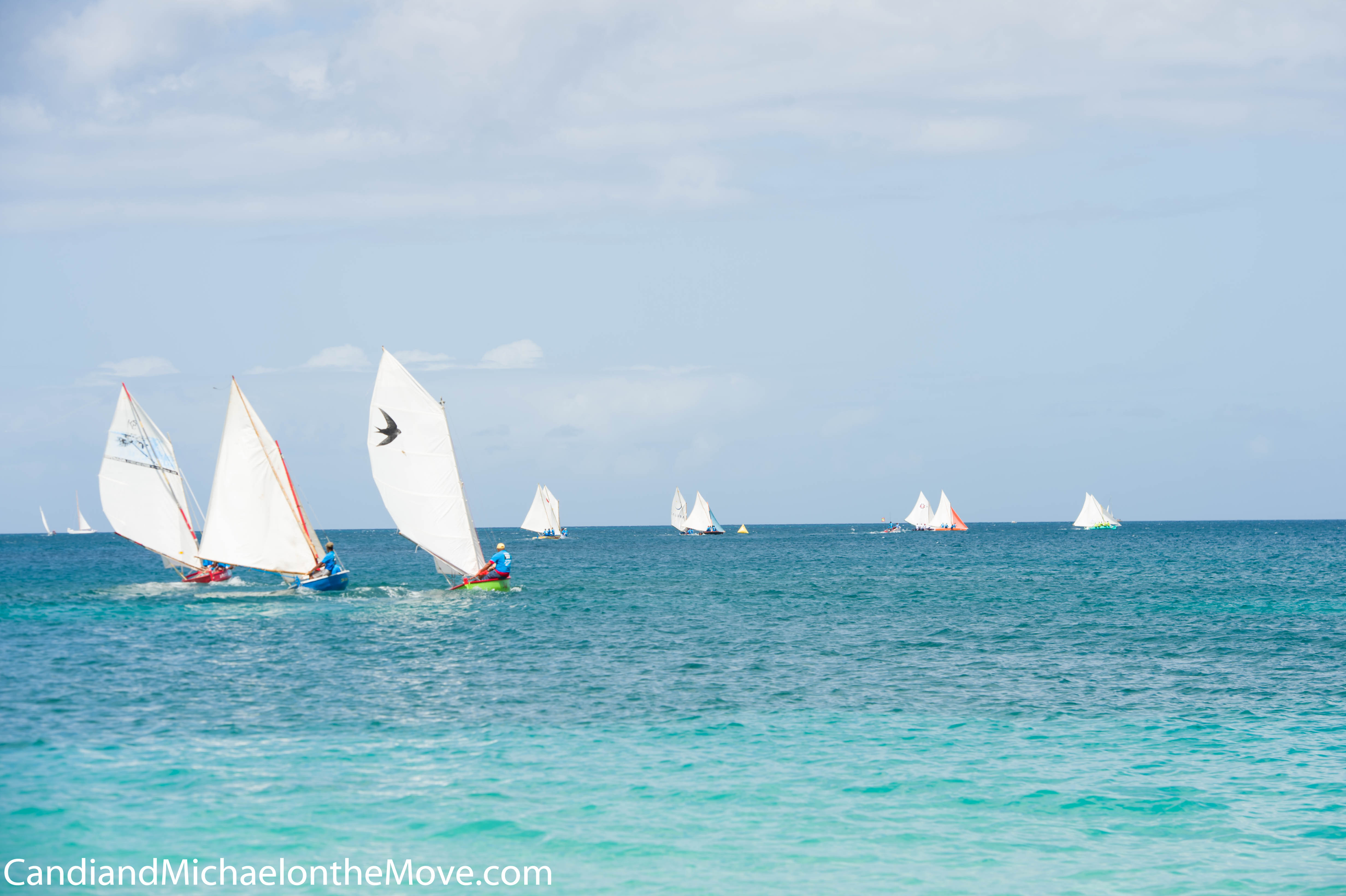
A “picture perfect”, beautiful day for sailing – glorious sun, good wind and definitely a party atmosphere on the beach as visitors and locals root for their favorite boats.

Crystal clear, turquoise blue water lapping onto 2+ miles of white sand beach, makeshift food stalls with mouth watering smells, vendors selling luscious local food and drinks, other stalls selling souvenirs and local crafts, music blaring from a large sound stage, lots of locals and tourists mingling and laughing while about 40 workboats rest on the sand and get prepped for the intense competition to determine which sailing village will hold the honor of winning the 2016 Sailing Festival ~ known locally as the Workboat Regatta.

The work boats are rigged and line the beach waiting to be called for their village race. there is tremendous competition between the fishing villages for the distinction of Champion of Champions.
The work boats are rigged and line the beach, waiting to be called for their village race. There is tremendous competition between the fishing villages for the distinction of 2016 Champion of Champions.

The Grenada Sailing Week is bigger than this and is actually a week-long event that attracts sailors from all over the world to race against each other in a variety of races and boat classes, each day ending with a party.  There are 5 classes of yachts that race and each yacht races multiple times.  Results of each race are tallied up to determine the overall winners.  Of course, there is plenty of fun, food and partying going on during the races and at the evening parties.  It’s thrilling to see these sleek, expensive yachts slicing through the waves but, I have to admit, my heart is with the workboats.
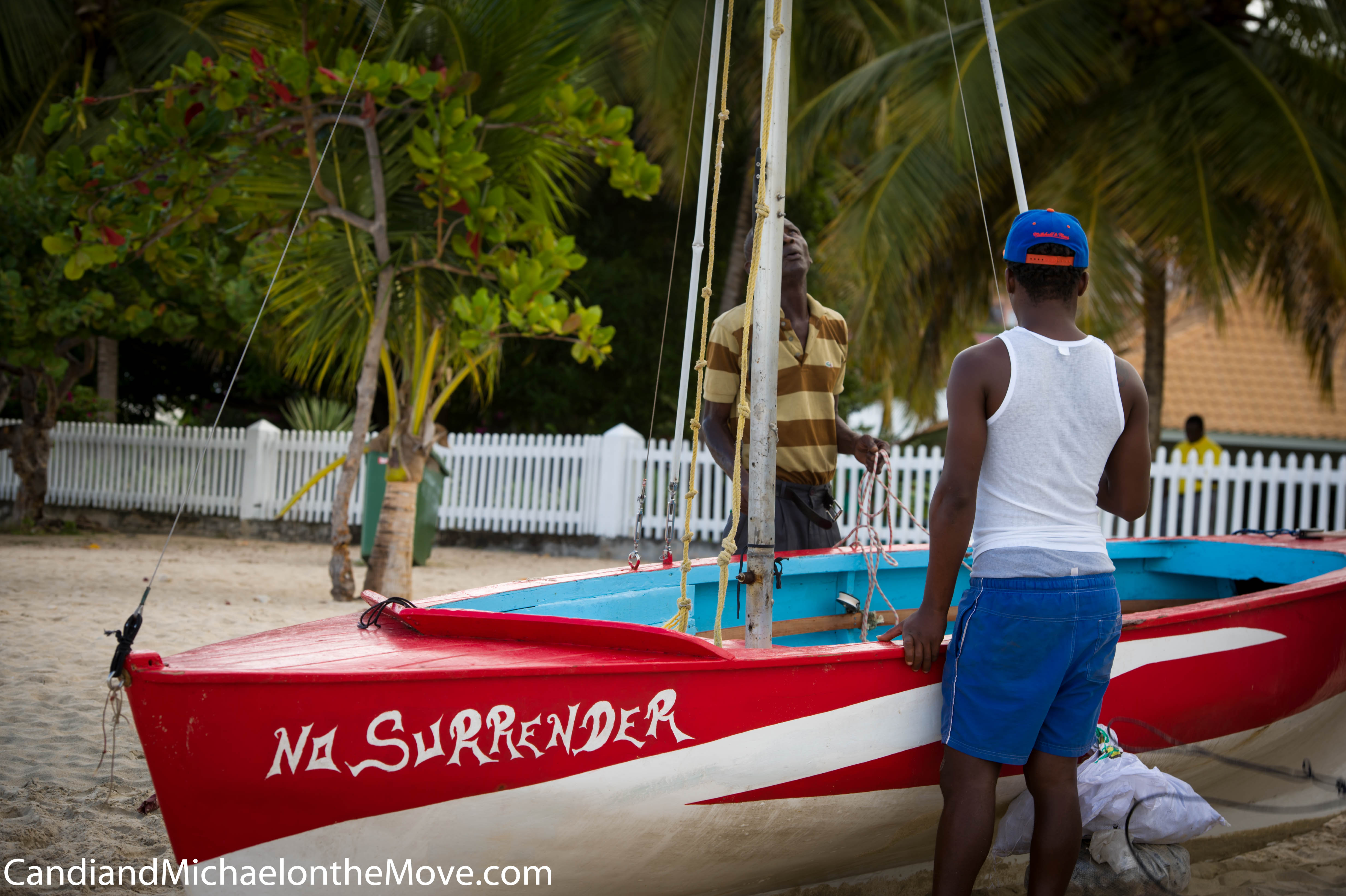
These work boats are owned by the local fishermen and they go out daily to catch "the fish of the day" for the stores, restaurants, lucky residents and savvy visitors.
These work boats are owned by the local fishermen and they go out daily to catch “the fish of the day”. Quite different than the huge commercial ships that ply the oceans. I love the creative names lovingly painted on each boat. (The other side says No Retreat”)

Workboats are the traditional 16 to 17 foot wooden boats that the local fishermen use on a daily basis to bring in the “catch of the day” to restaurants, stores, lucky residents and savvy visitors.  They are powered by motors and do not have sails.  Certain seaside villages in Grenada – Gouyave, Woburn, Grand Mal and Sauteurs are well known for their fishing culture and there is a friendly, but rigorous, rivalry between them each year to claim the prize of fastest boat and best sailors.  The races also attract fishermen from Carriacou and Petit Martinique, Grenada’s sister islands, and sailors from the Grenadine Islands like Bequia and Mayreau.  For the day of the races, bamboo masts are cut and rigged onto the boats in a wide variety of ways ~ almost always including a least some duct tape!
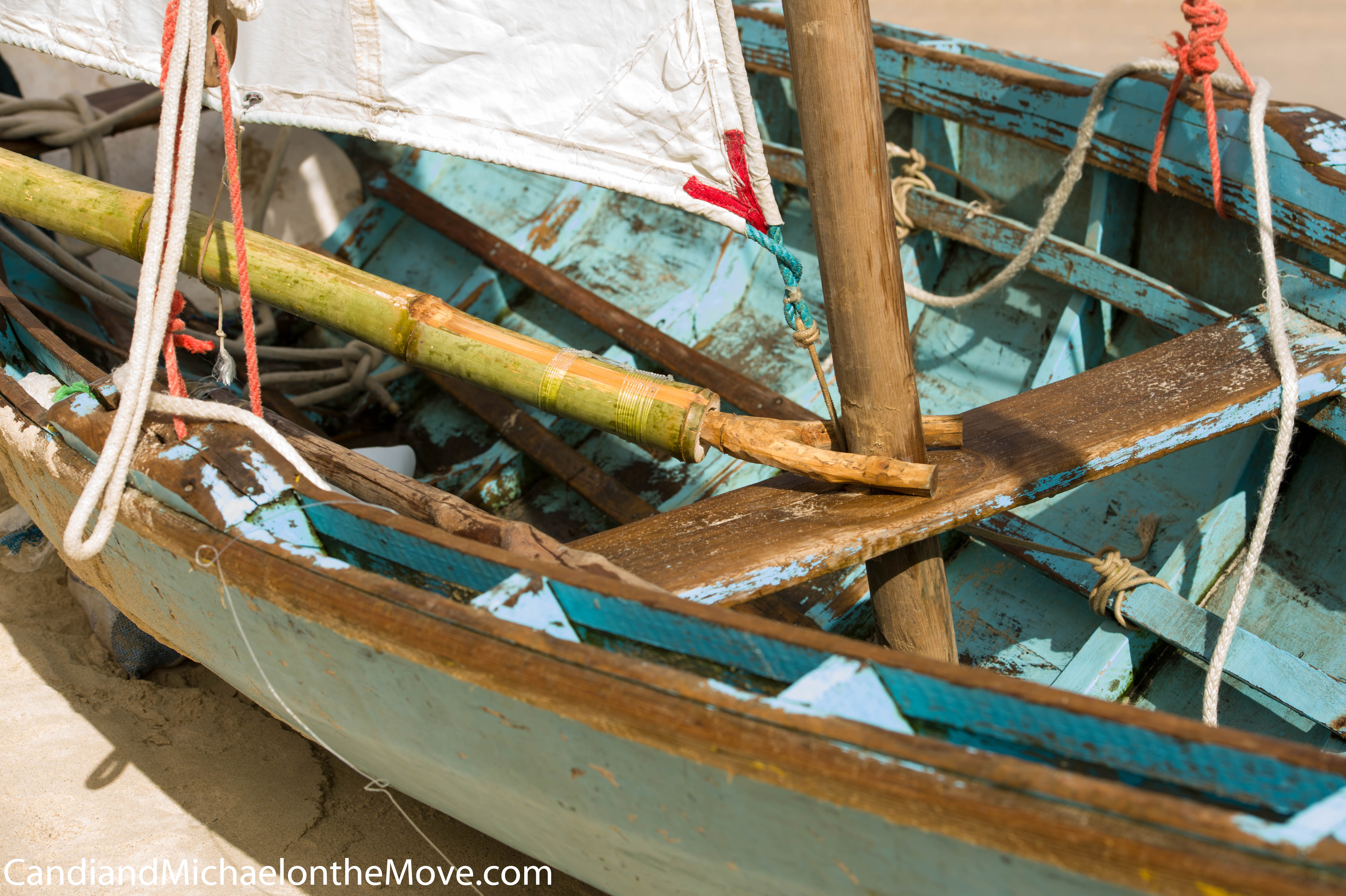
This is a great shot showing the condition of the average work boat and their makeshift masts. This is a very typical set up with bamboo booms.
This is a great shot showing the condition of the average work boat and their makeshift masts jury rigged for sailing in this annual race. This is a very typical set up with bamboo booms.

We’ve been coming to the Workboat races for many years and the boats and rigging have gotten much more professional and now specialty boats are being built specifically for the final race of the regatta with traditional masts and bigger, better sails.  In the early days, more than half the fun was watching the sailors collaborate (argue) and try to figure out how to jury rig their boats with the bamboo masts and sails and get them to stay upright.  Now, it’s more organized and some of the charm and the adventure of rigging the boats from scratch is gone.  But the rivalry, excitement, laughing and fun is still there in full measure.  It is a great 2 day event.  Plus, now we know local fishermen and root for specific boats, as they race each other for the final trophies.

Here, sailors are prepping to sail against each other in acommunity (or village) competition. Thye have pulled and pushed their boats into the surf and are trying to hold them in place until the horn blares, starting the race. Once they hear it, they run pushing their boats into the waves, jumping in at the lasdt minute. The last guy will be almost neck deep in the water when he needs to pull himself up and in.
Here, sailors all from the same village are prepping to sail against each other in a community competition to determine the team that will represent the village in the cross community competition. They have pulled and pushed their boats into the surf and are trying to hold them in place until the horn blares, starting the race. Once they hear it, they push their boats into the waves and jump in at the last minute. The last guy will be almost neck deep in the water when he needs to pull himself up, over and in. Often there are legs flailing!

Our local fisherman, Captain Ray, had one of the boats racing for Woburn.  We get the bulk of our fish and Lobster from Captain Ray.  He doesn’t carry a phone so Michael or I need to head over to the Woburn dock around 3 o’clock to see what he has caught that day.  My favorite is Lobster which is $12XCD or $4US per pound.  He has also turned us on to wonderful crab and, on any day, may have 2-3 types of regular fish to sell, as well as lambi (or conch).
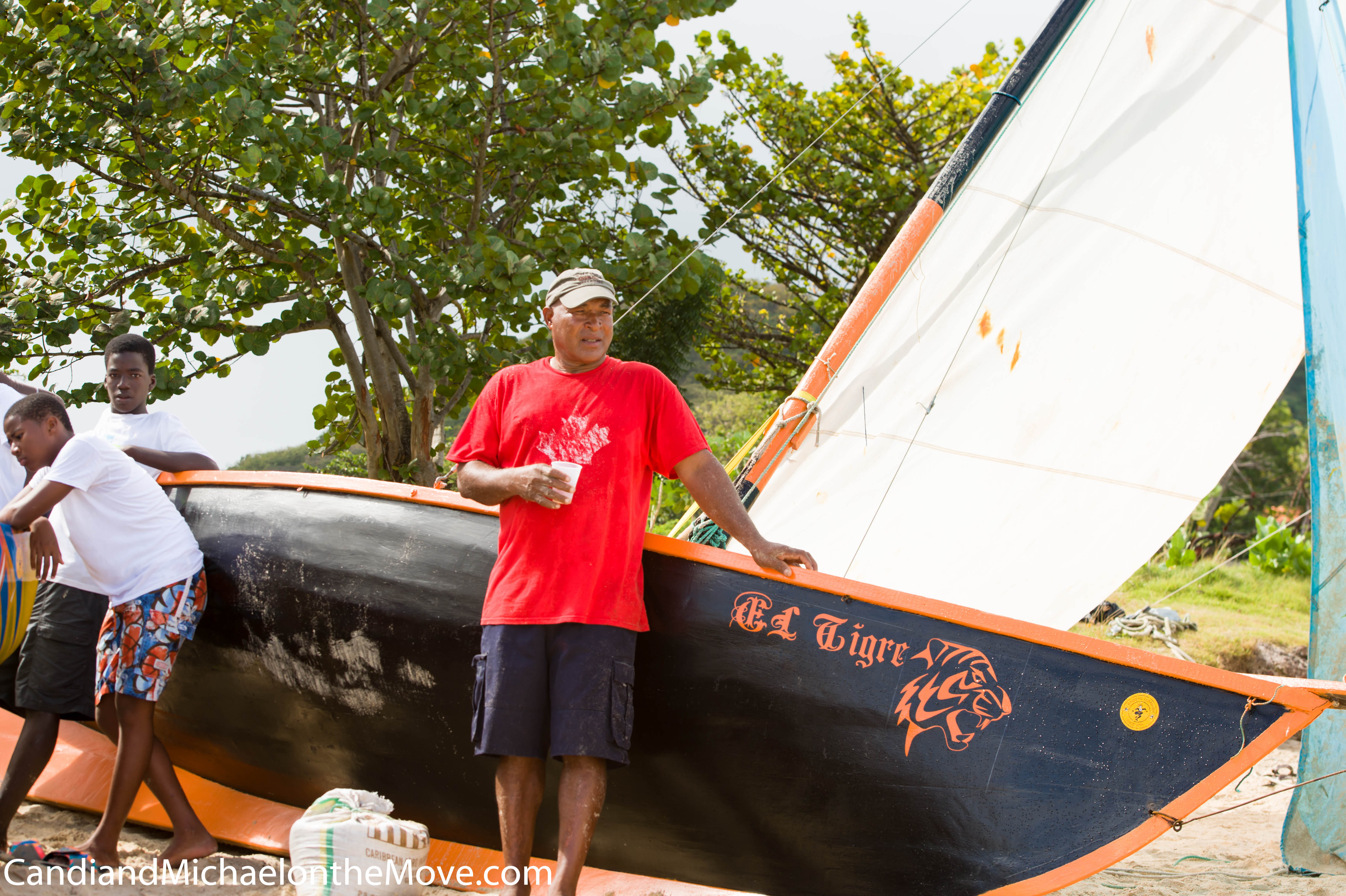

Captain Ray, leaning against his workboat, waiting for the village of Woburn to be called. Unfortunately, the Tigre will not place in the finals this year.
Captain Ray, leaning against his workboat and enjoying a rum, waiting for the village of Woburn to be called. Unfortunately, E L Tigre did not place in the finals this year.
Look at the size of this starfish!

We stayed for most of the day on Saturday to watch the races, eat the great Grenadian food and soak up some sun.  The food booths all looked great but one booth stood out.  Everything there looked fantastic and we got grilled fish, jerk chicken and oil down, Grenada’s national dish.  The food was so good, I went back to meet and compliment the chef, Rain.  I found out that she serves food at a Vendor night on Wednesdays at True Blue Bay Resort  and now we are regulars to her booth each week.  YUM!  A bonus was seeing a number of HUGE starfish when we were swimming, between races.

On Sunday, the winning workboat and village is announced.  Then there is an additional race where the specialty boats race.  Each boat is the same and each town nominates a composite, “winning” crew from all their sailors to battle it out for the best sailing team of the weekend.  We didn’t attend on Sunday this year and it’s been a trial trying to figure out who won the final trophy, Champion of Champions.  There was a lot of local press coverage leading up to the race but NOTHING after to say who won.  I checked the Sailing Festival website which again was updated almost daily until the start of the races and then …. nothing!  I checked with Captain Ray but he wasn’t sure either.  Three WEEKS later, feeling frustrated, I started scouring the internet and, way down in the search results, I found a FaceBook page for the Sailing Festival with all the results ~ Success!  Facebook, the great equalizer and disrupter of the tried and true news sources.  (I am now following this page).
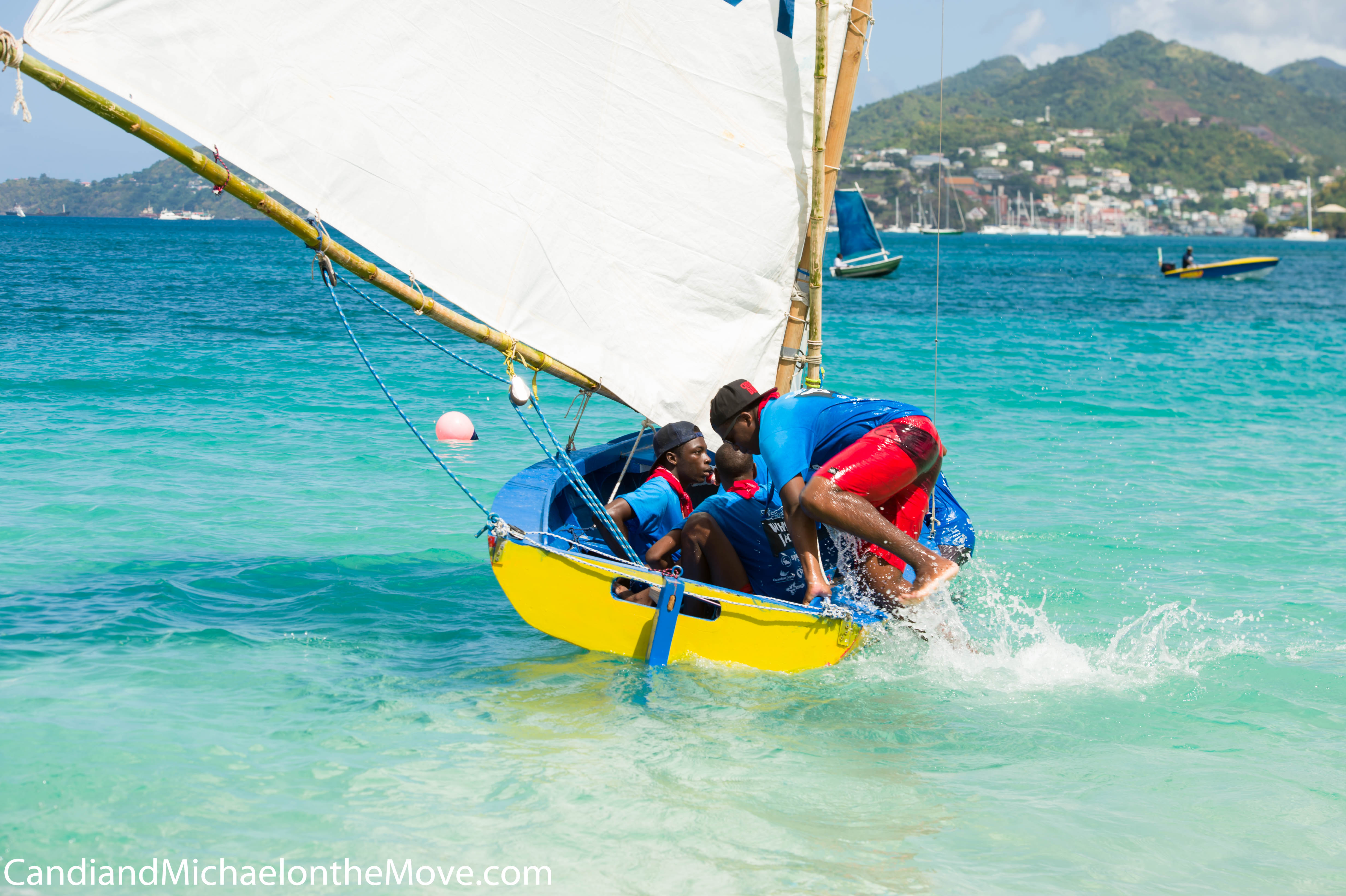
Last man jumping and diving into the boat as it takes off from shore.
Last man jumping into the boat as it takes off from shore.

Here are the final results.  (The list is long but I included the entire list because the names of the boats are as colorful as the paint jobs and I thought you would enjoy them):

Community Class Races – These are the top 3 winners from each village (or island).

Carriacou

  1. Ark Royal — Skipper Vernell Phillips (Boat from Bequia)
  2. Lightning — Skipper Adolphus Forde (Boat from Mayreau)
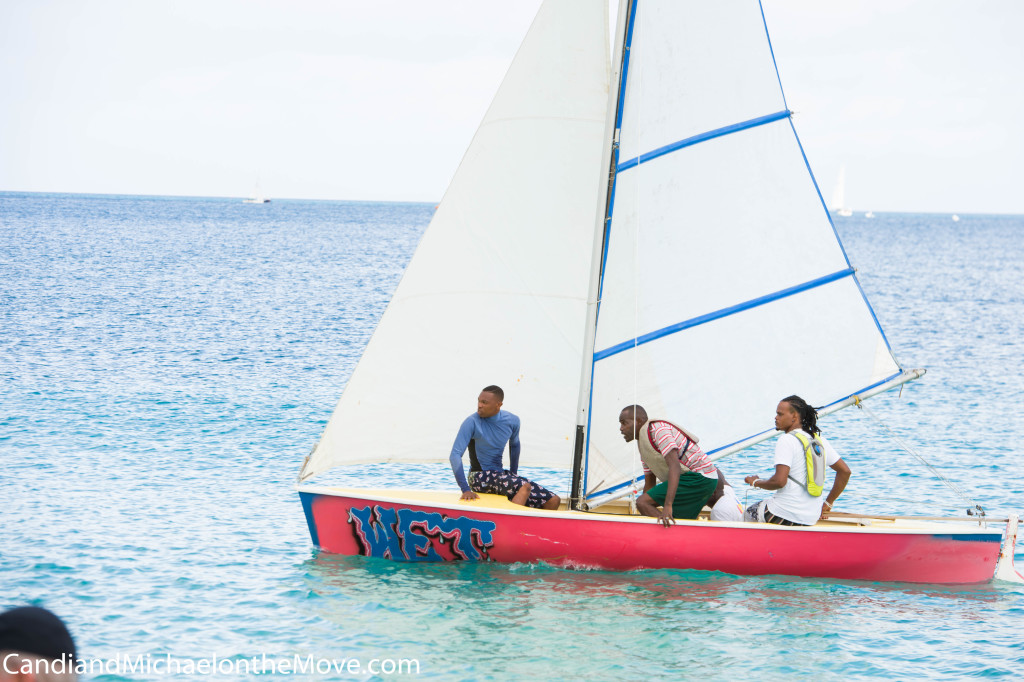
  3. Wet — Skipper Carl Edoe

    "Wet"
    “Wet” off to a good start.

Gouyave Canoe

  1. Sonic — Skipper Israel Darangit
  2. Etieron – Skipper Carlyle Joseph
  3. Sky Red — Skipper John George

    "Sonic" leading the pack.
    “Sonic” leading the pack.

Gouyave Sloop

  1. Reborn – Skipper Kwesi Paul
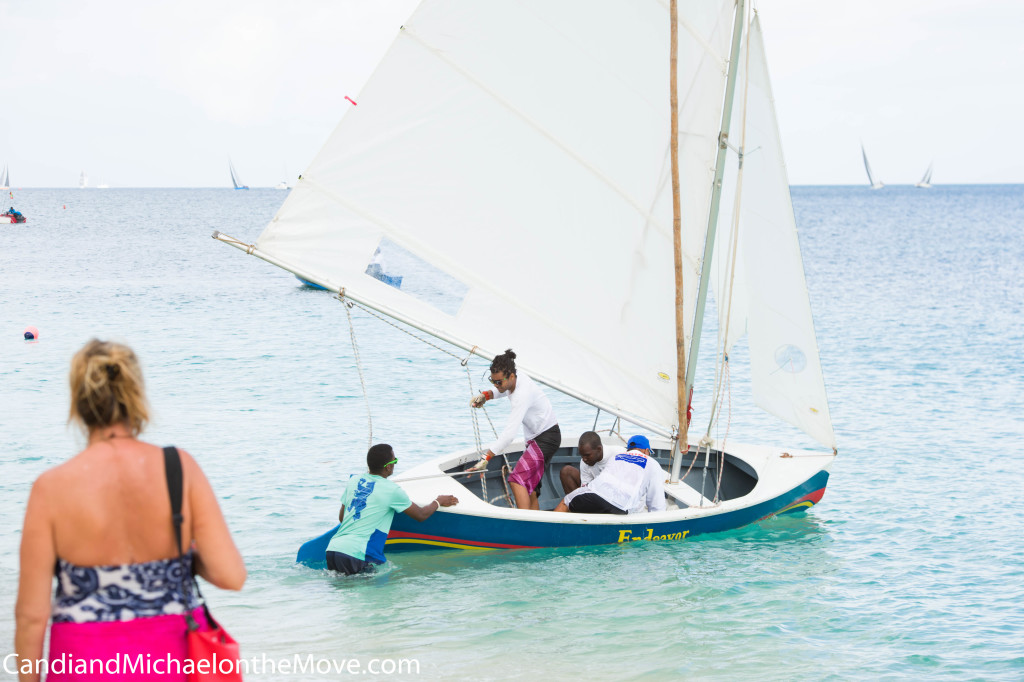
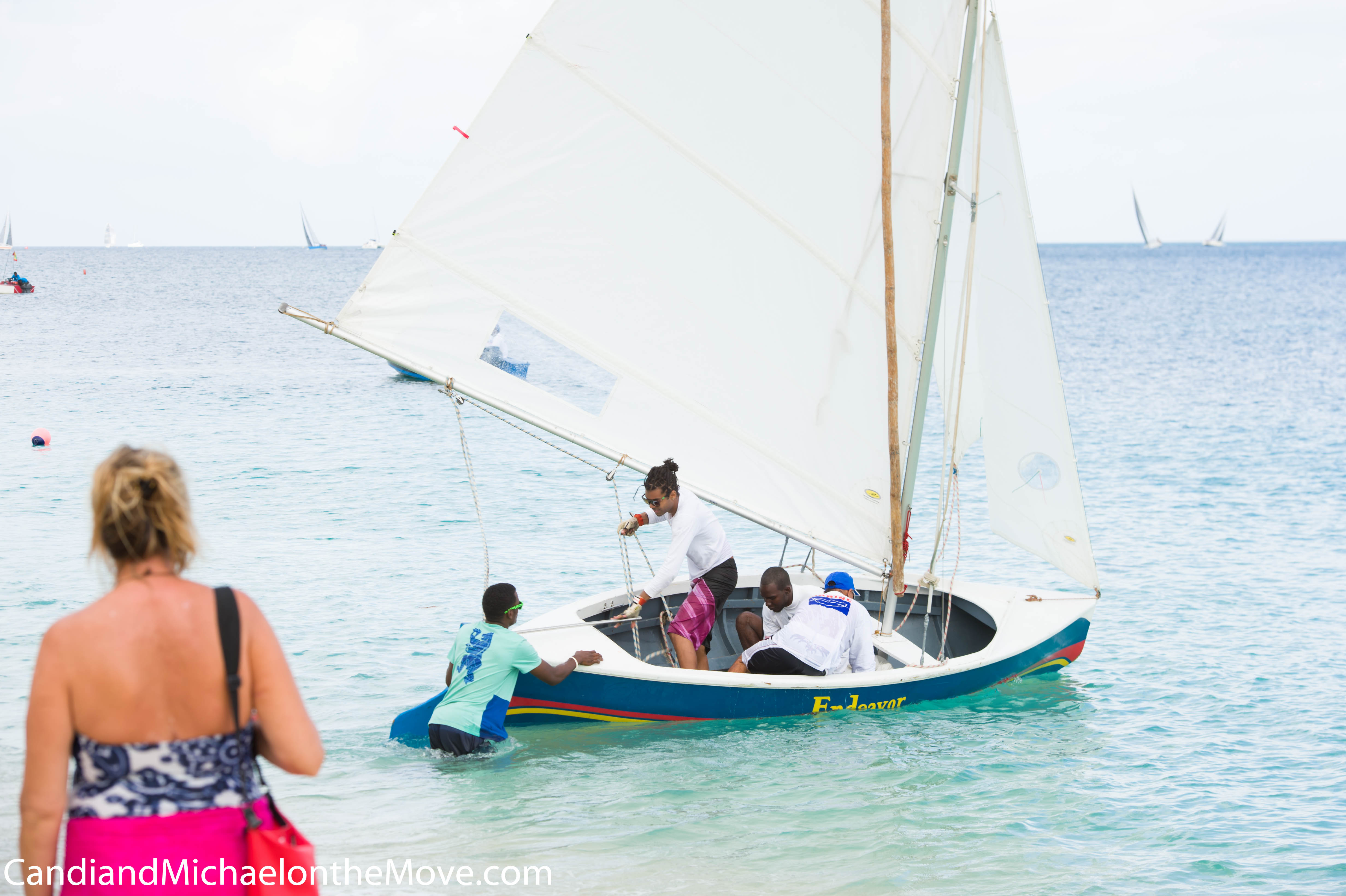
  2. Endeavour — Skipper Javid George
  3. Classic — Skipper Ted Richards

    "Endeavor" rushing off the start line.
    “Endeavor” rushing off the start line.
Sauteurs

  1. Swift — Skipper Christopher Jaheir (Boat from Grand Mal)
  2. No Retreat No Surrender – Skipper Bertrand Noel
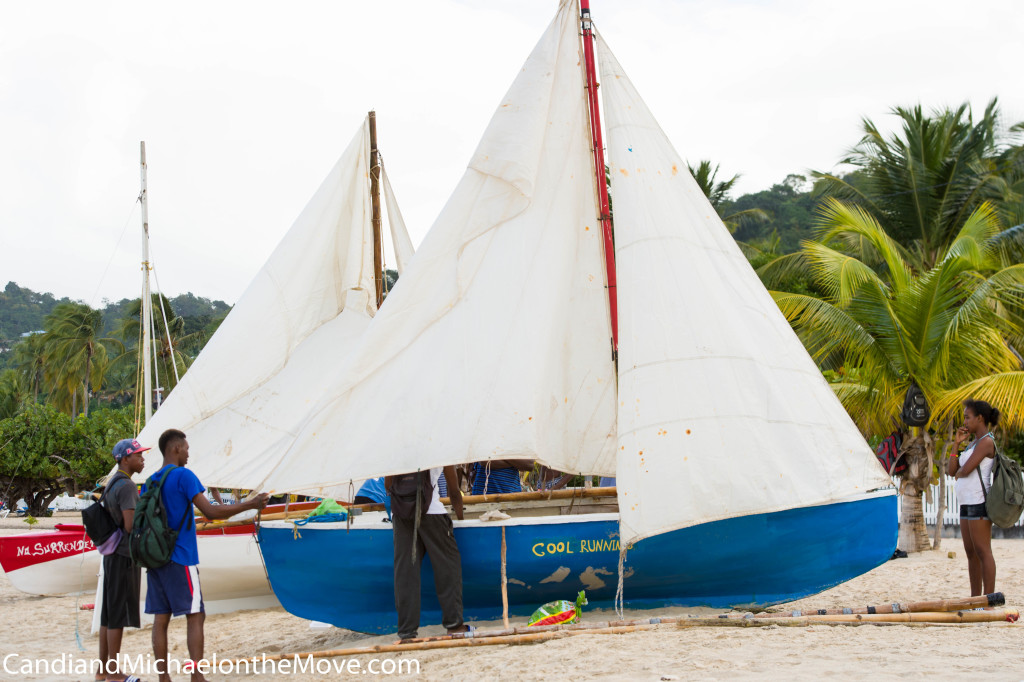
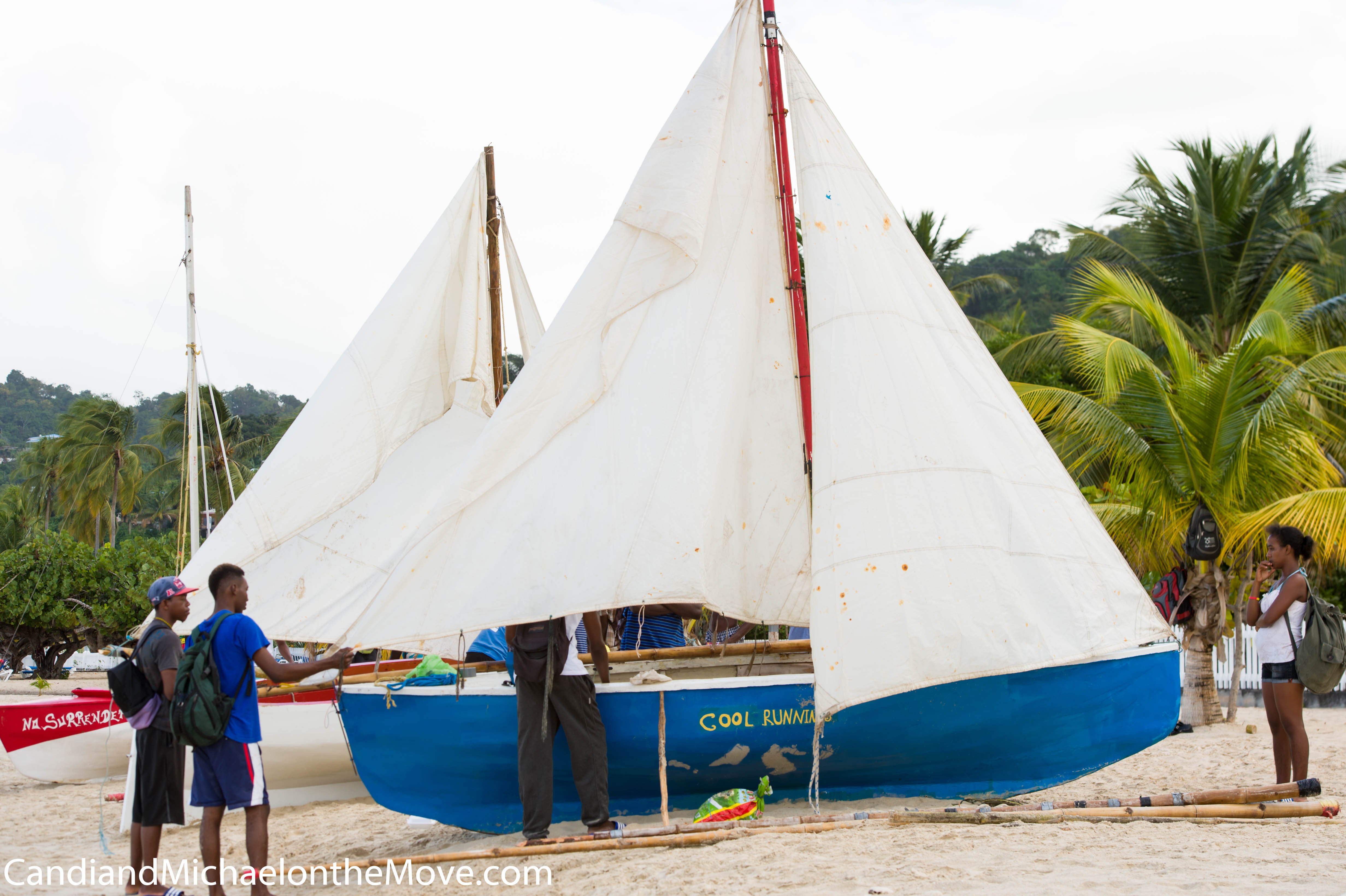
  3. Cool Runnings — Skipper Ryan Olive

    "Cool Running" getting rigged for its first race.
    “Cool Running” getting rigged for its first race with “No Retreat, No Surrender” in the background.
Woburn

  1. Trouble Again — Skipper Allan Noel
  2. LOCAL – Skipper Clinton Brathwaite
  3. Press Play — Skipper Shakeil Gibbs
    "Trouble Again" won the Woburn race.
    “Trouble Again” won the Woburn race. I love the graphic on the bow – no messing with these guys!
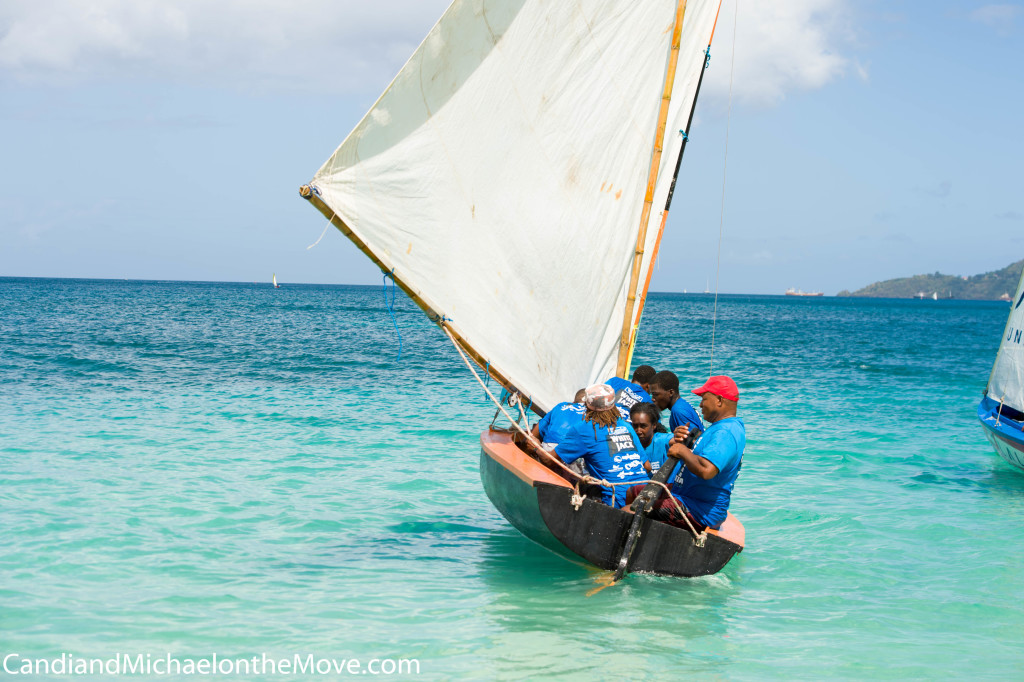
    Captain Ray's boat, Tigre, off to a good start.
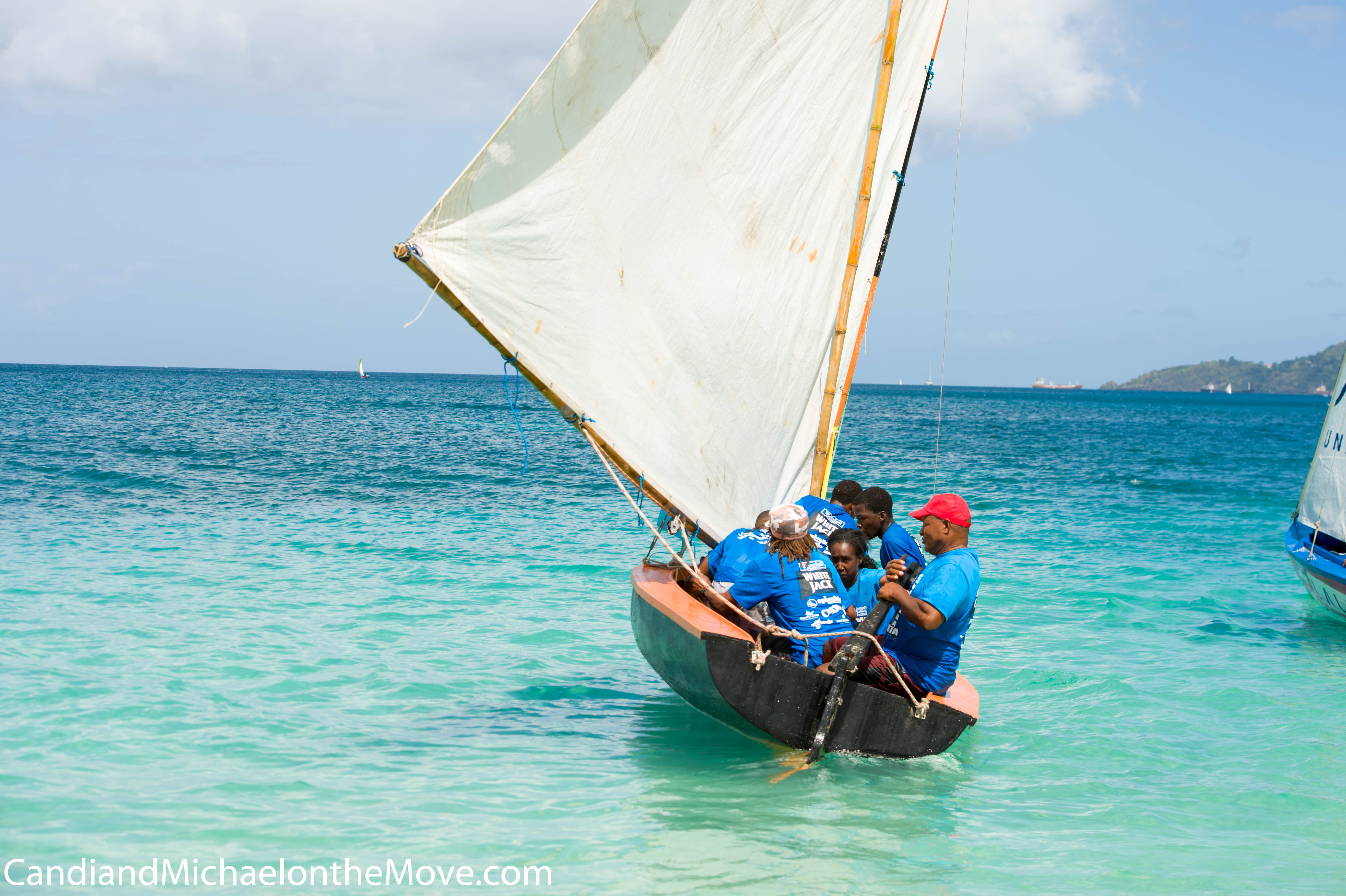
    Just starting to heel and “looking fine”. If you think this is an overloaded boat, I assure you it is not. One holiday, we were invited to a barbeque on a popular island off shore and this size boat was so full it was only floating about 1 inch out of the water ~ and people were still kept getting on! I figured, worst case we’d sink and it was a short swim in warm water to get to the island. We arrived safe and sound, just like the locals said we would ~ AMAZING!

Match Race Finals – This is where each village picked their best sailors from all their boats and raced all using the same type of boat to showcase the best team of sailors.  There are 2 classes Junior and Senior:

National Team Sailing – Junior – Sponsored by Budget Marine
1. Team Woburn – sailing in Gybe Talk
2. Team Gouyave – sailing Mr.X

National Team Sailing – Senior – Sponsored by Carib
1. Team Sauteurs –- sailing in Tomorrow’s Worry
2. Team Gouyave –- sailing in Mr.X
3. Team Woburn – sailing in Gybe Talk
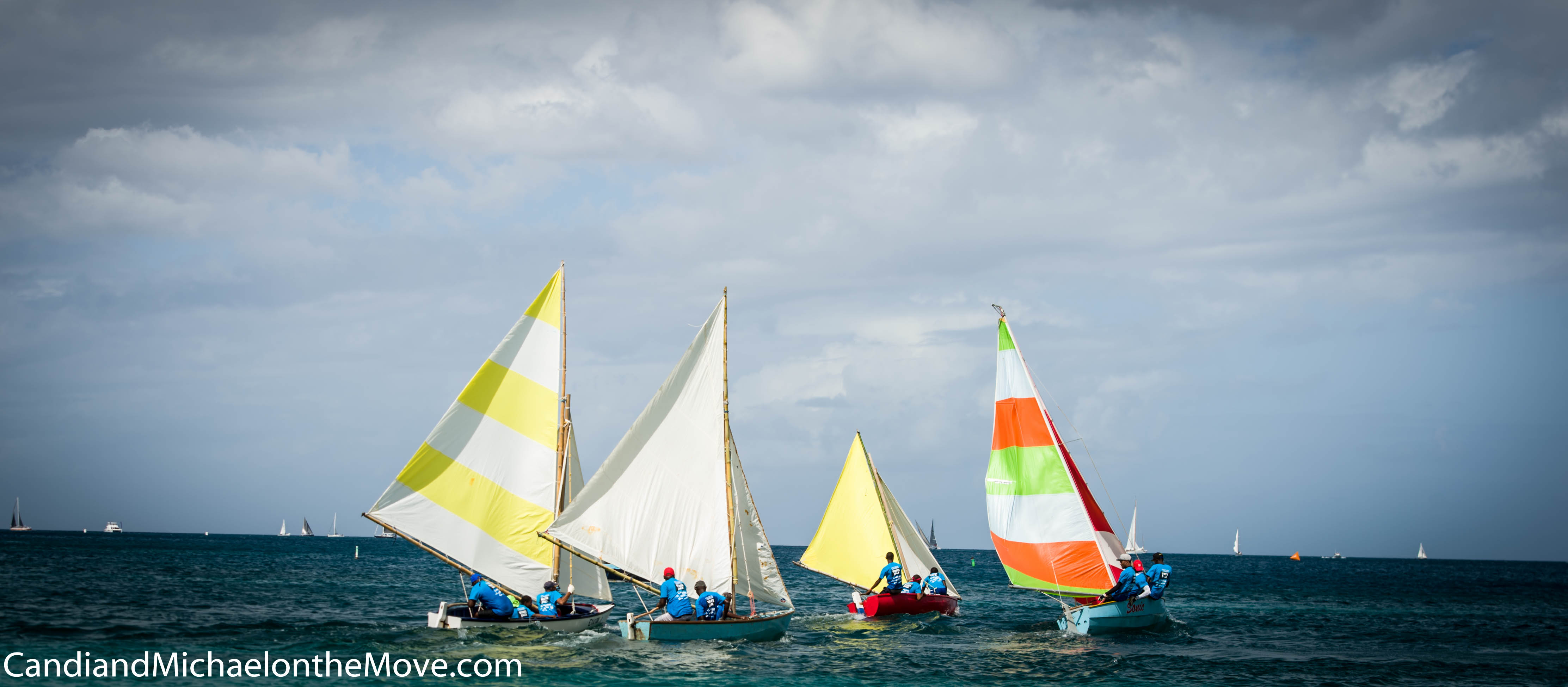
A fast start to one of the Village races. It's a miracle they don't all collide as they fight for position.
A fast start to the village of Gouyave race. It’s a miracle they don’t all collide as they fight for the lead position.

‘Champion of Champions’ Match Race Final –  The Skipper & crew from the winning boat in each of the Community Class races, using the same type of boat  to determine the ‘Champion of Champions’

Grand Winner for the 2016 Champion of Champions:
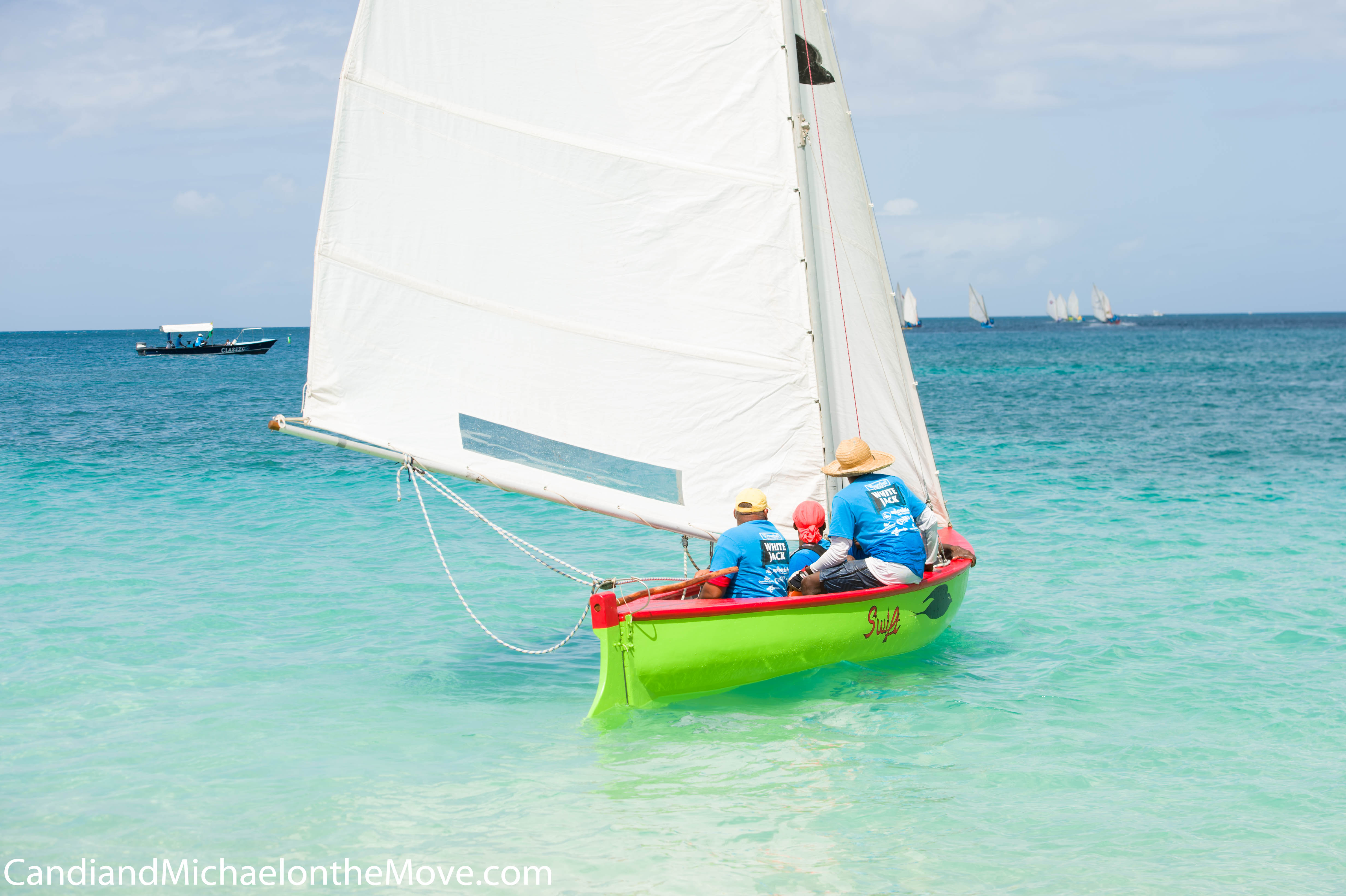
"Swift" the winning community boat AND the sailing team that won the 2016 Champions of Champions racing all the other winning villages in competition boats.
“Swift” the winning community boat AND the sailing team that won the 2016 Champions of Champions racing all the other winning villages in competition boats.

First Place: Grand Mal — with a crew from the winning boat Swift — Skipper Christopher Jaheir.  Imagine his pride being named the best of the best and winning US$1,000 and a Yamaha outboard motor from McIntyre Brothers  This is quite the prize ~ You’ve seen these boats.  The cost of a brand new motor is way out of most Captain’s means and  $3000XCD is over a month’s wages for a well paid earner. (Compare it to a person in the US making $48K a year and winning $5K and getting a new car – a literal windfall.)

Second Place: Gouyave — winning US$500.00
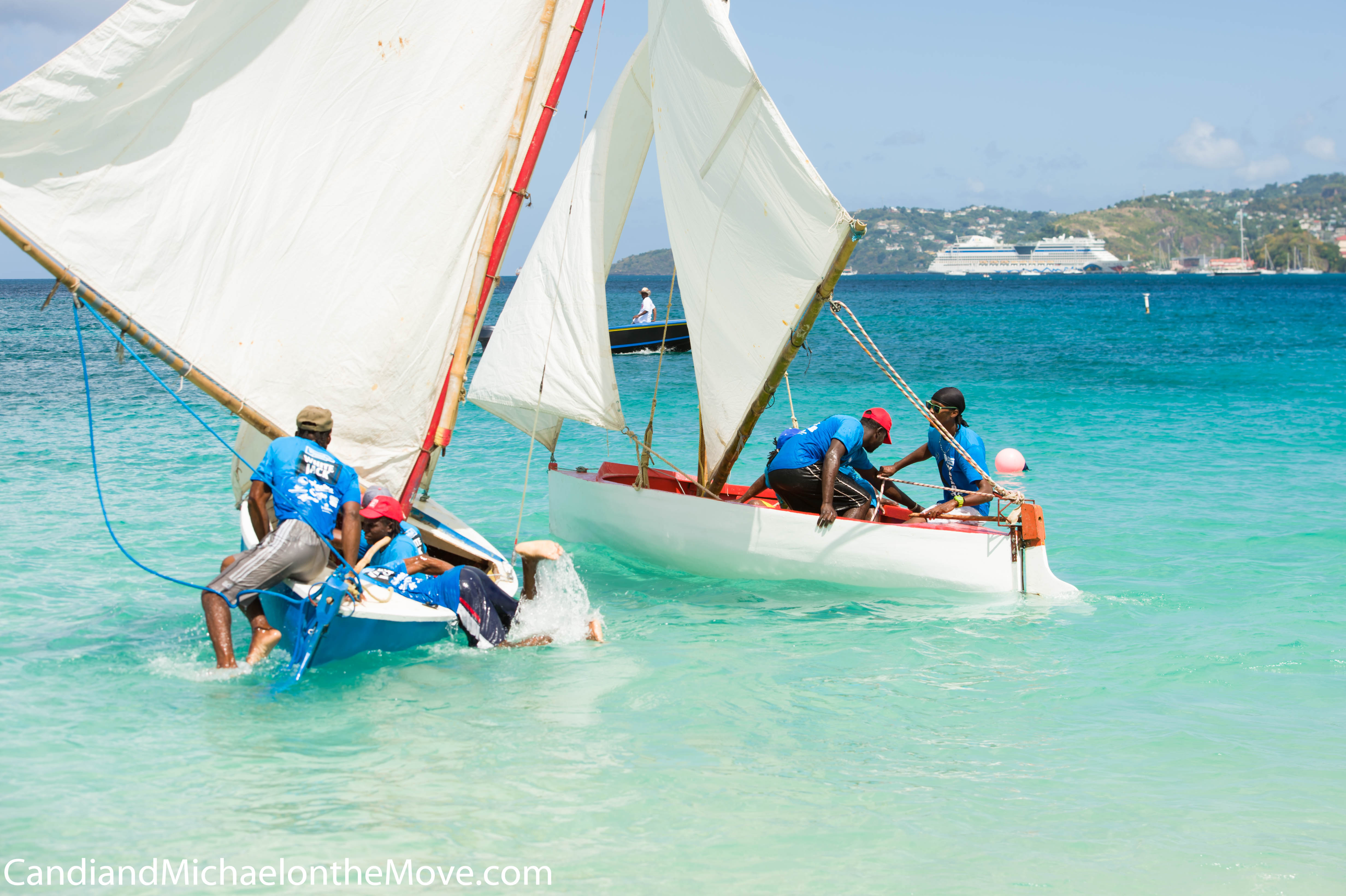
Feet flailing and the last sailor "dives" into the boat.
Notice the guy hanging off the left side of the left boat – trying to keep it from capsizing as, feet flailing, the last sailor “dives” into the boat.

Third Place: Woburn — winning US$250.00
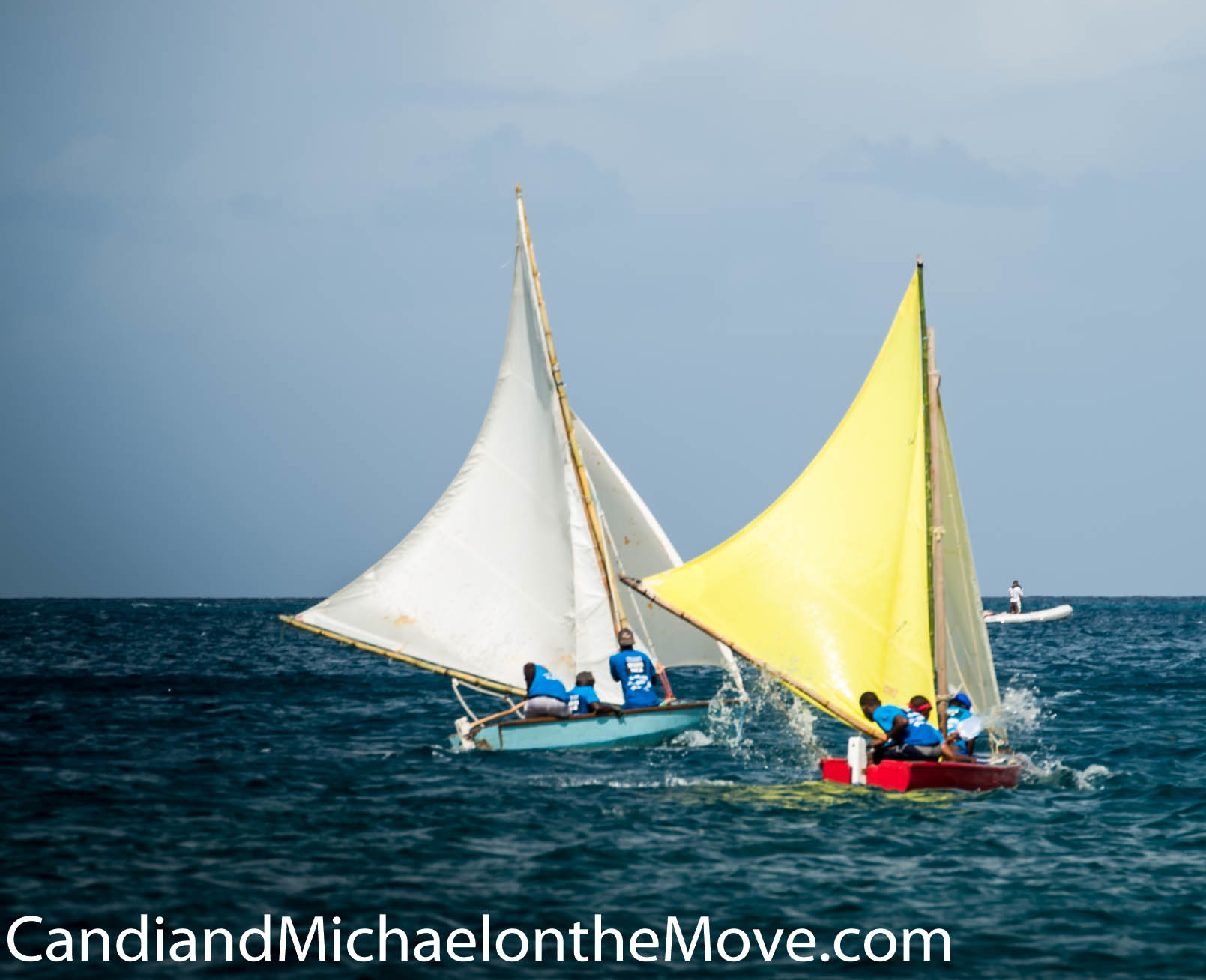
And there is always bailing .....
And there is always bailing …..

All in all, another wonderful Sailing Festival.  I can’t wait until next year.  And hopefully, we will have some friends visiting – Save the date – January 28th and 29th, 2017

BONUS:  Here is a great video of the Sailing Festival that gives a good feel for the event.  Posted on Facebook on the Sailing Festival page, created by True Blue Resort, one of the Festival sponsors …. Grenada Sailing Festival video
Filed Under: Expat life, Grenada, Travel Tagged With: Grenada, Grenada Sailing Festival, sailing, travel

Two Steps Forward, No Steps Back ~ Making Progress

February 23, 2016 by Candi Licence 1 Comment

This has been a great week to see some parts of our construction project coming together.  First, the mold that was poured on the front of the house was uncovered and finished.  Second, the back wall of the house got blocked up and readied for the finish work.  The cistern was completely cleaned out, power washed and the wooden flooring was built.  On top of that, rebar was wired together and the floor has been poured.  I love when we are in a part of the process where changes are readily visible.

As with any construction, there are weeks that feel fast – meaning you can see lots of changes – and weeks that feel slow – meaning lots of infrastructure work is completed but nothing looks different.  This last week was a fast week and was very encouraging.

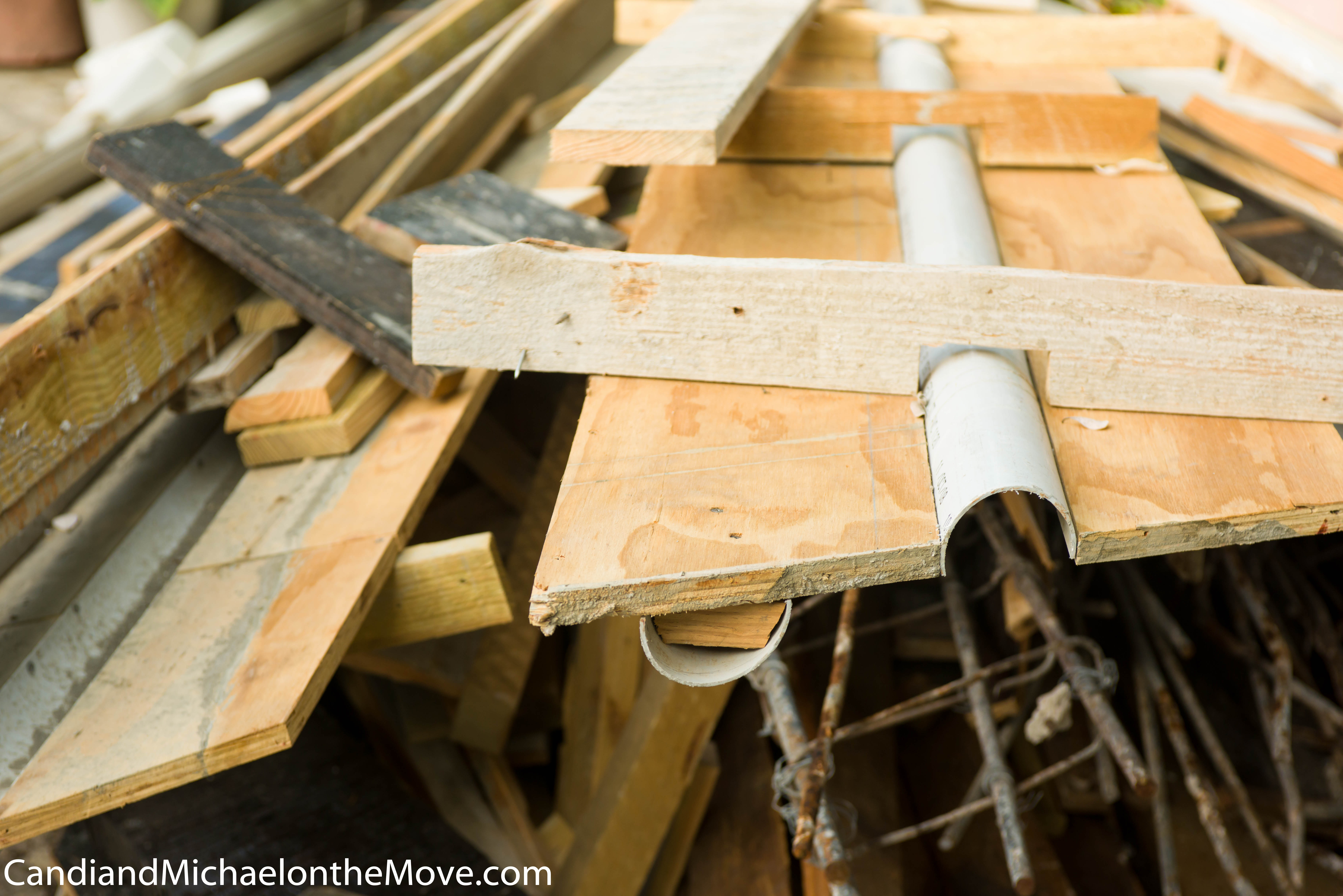
The workers had constructed a mold to finish off the top of the peaked walls.  They were trying to match a design that was part of the original house and they were very ingenious in getting the curves the same by using long pieces of PVC pipe attached to the wooden frame.

This is the wooden mold that was built to create the finished molding. I liked how they used PVC pipe to create the curves.
This is the wooden mold that was built to create the finished molding. I liked how they used PVC pipe to create the convex and concave curves.

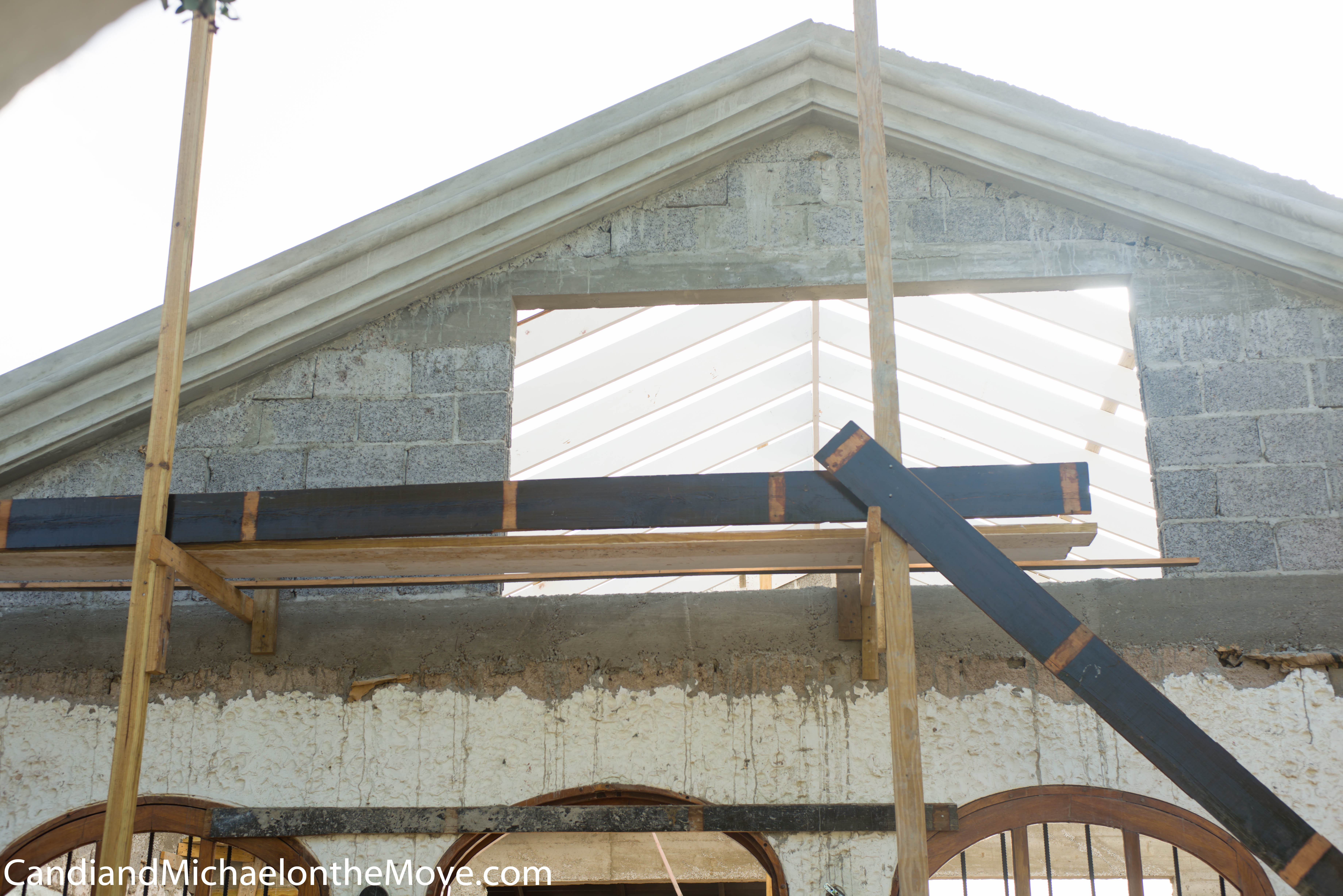
The mold came off and the basic structure of curves and lines was there, but it was pretty rough.  They then mixed a cement with very fine beach sand and when they finished “plastering”, the mold it looked lovely.  What a difference finish work makes.

The finished molding looked great after they added a layer of fine sand cement to smooth out the rough spots.
The almost finished molding “looking great” after a layer of fine sand cement was added to smooth out the rough spots. They just need to finish the top right side which is still rough from the mold.

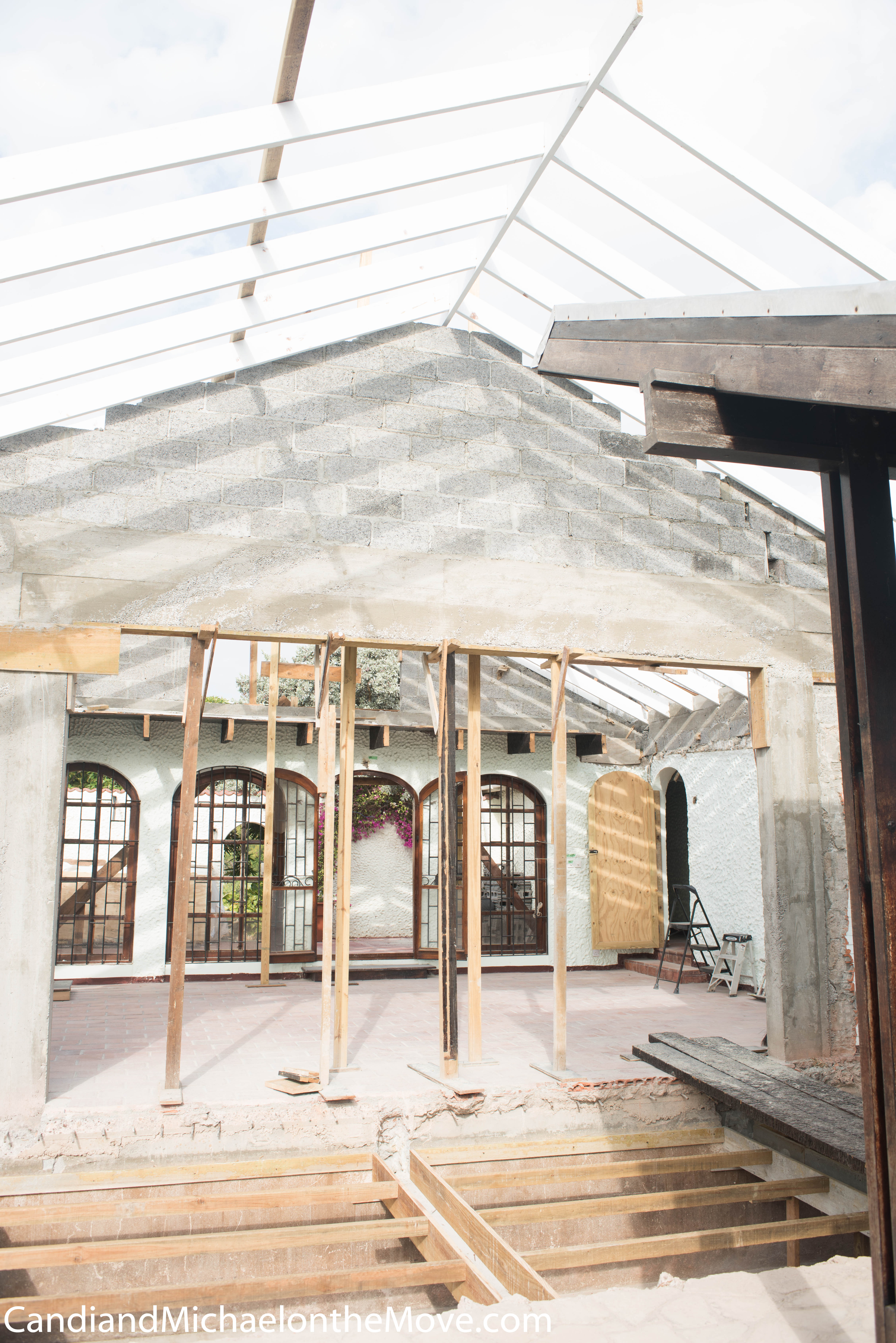
The back wall of the house has been blocked up – not too big a job since we still have a 16 by 10 foot opening that will end up having an iron grate.  By completing that step, they are getting ready to put on the wooden ceiling layer of the roof.  (We’re still waiting for the aluminum roof covering to arrive and get processed through customs.)

The new back wall is blocked up. Next the will make the mold to finish the top. You can also see the start of the wooden frame in on top of the cistern that they will use as a base to pour the floor.
The new back wall is blocked up to the new peaked roof line. You can also see the start of the wooden frame in on top of the cistern that they will use as a base to pour the floor.

We’ve had no appreciable rain since the beginning of January.  Just like gardeners or farmers have a whole different relationship with rain, right now we do too – watching the sky, checking the clouds, counting the minutes when it does rain, judging the intensity of the downpour or listening at night for how hard the rain is hitting the roof and for how long.  We haven’t had more than 20 minutes of rain at any one time, usually much less, and little ferocity, thank goodness.  This is good also because it means that during the day, the work is moving forward pretty much unabated.  Grenadians do not like rain and they stop work to seek shelter as soon as it begins to sprinkle.  Lucky for us these have been infrequent, very short breaks.

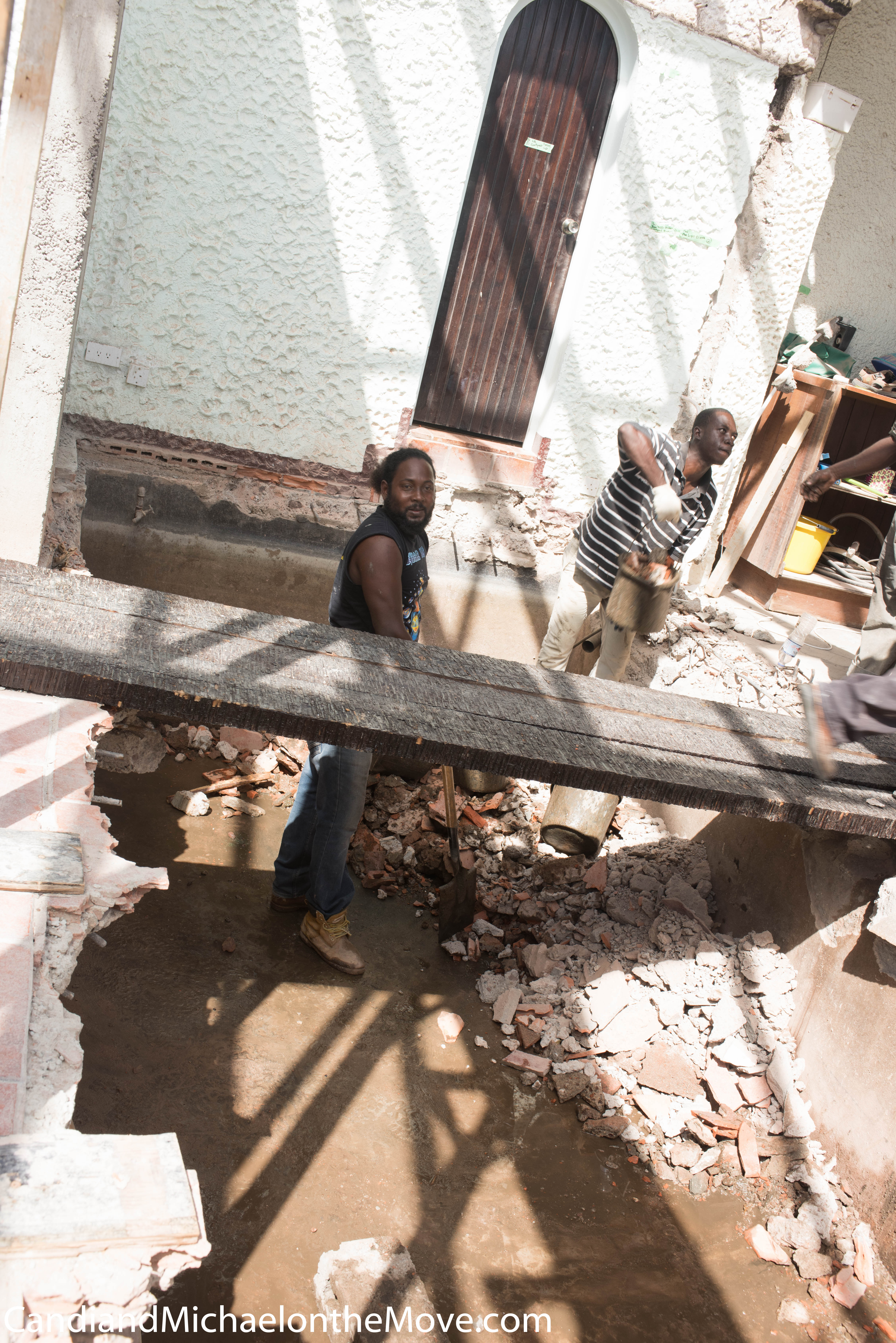
Clearing the rubble out of the cistern was a 4 man job. 2 men shoveling and lifting rubble ...
Clearing the rubble out of the cistern was a 4 man job. 2 men shoveling and lifting rubble …

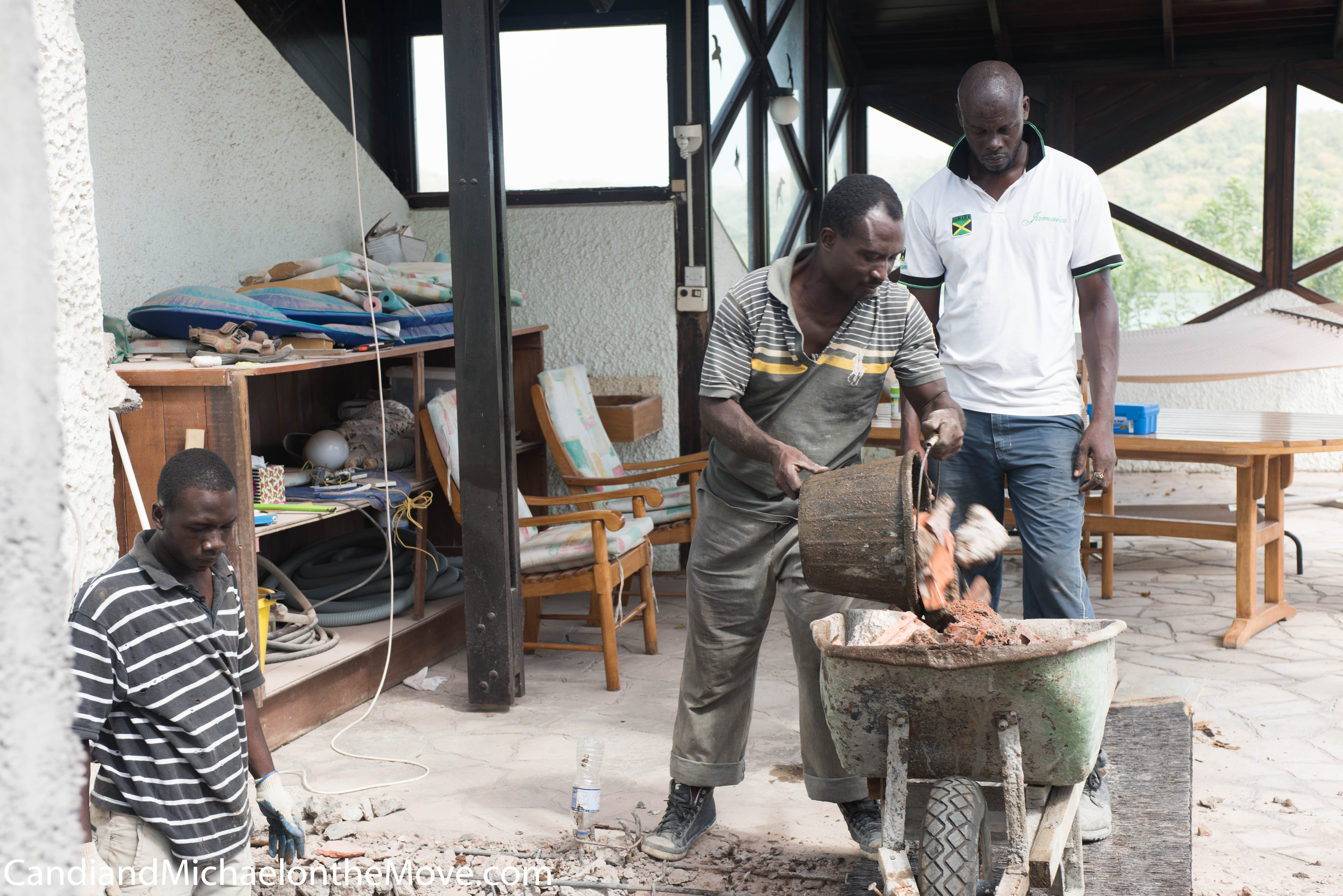
The cistern, which was full of rubble, has been completely emptied and cleaned (Walking the Plank ~ to Dinner) .  This job took two full days of hauling up buckets of rubble and wheel barrowing everything out to the driveway so it can be trucked away.  These guys definitely do not need to exercise when they get home!

... and two men emptying buckets and hauling rubble away in wheel barrows.
… and two men emptying buckets and hauling rubble away in wheel barrows.

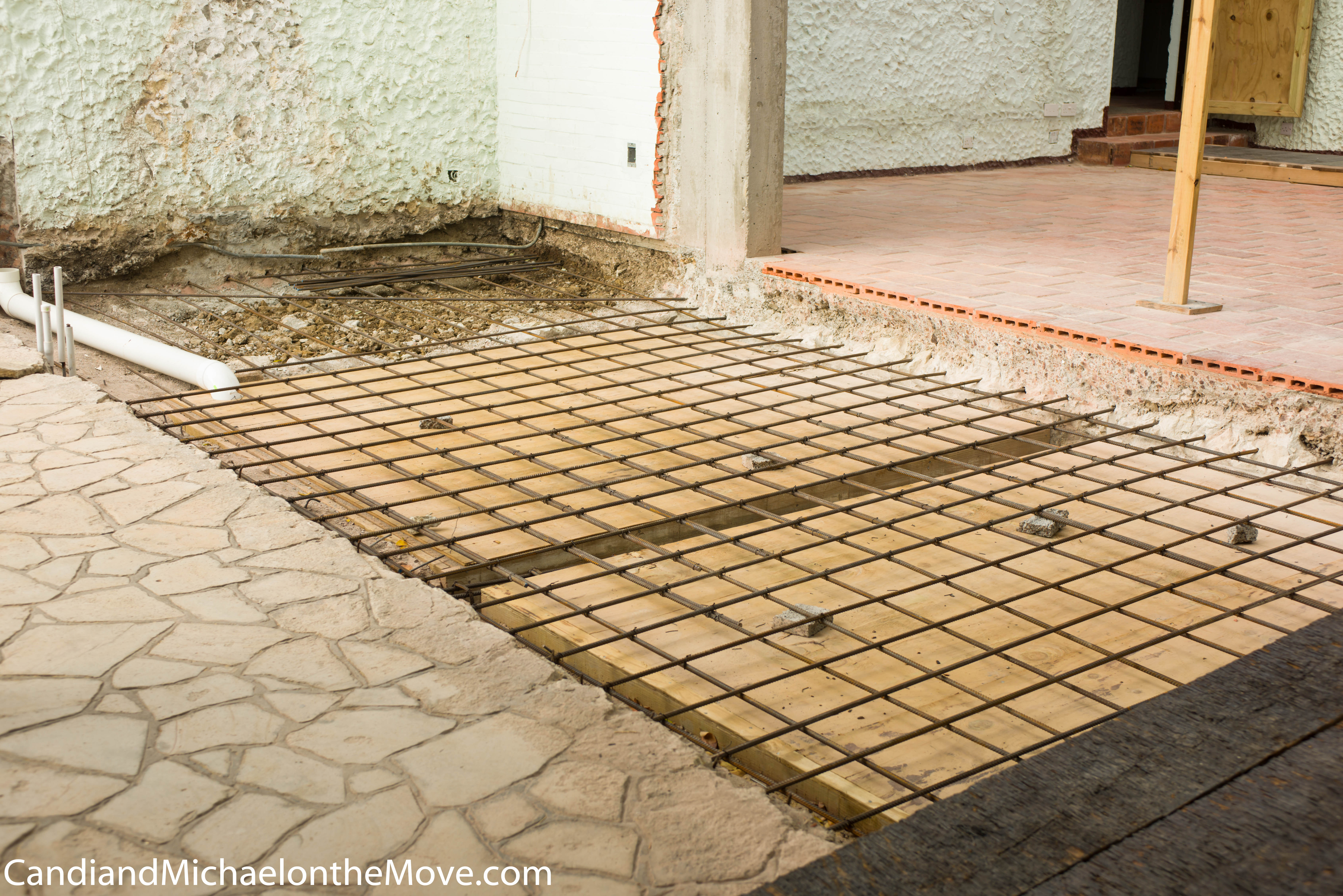
After the cistern was emptied, they power washed the interior until it was sparkling clean and then began to build the wooden structure that would hold up the cistern roof and would become the new patio floor.  After the frame was completed, they created an intricate mesh of rebar which got wired together and then they poured the new floor.

The rest of the wooden frame has been completed and the rebar has been laid down and wired together to form a strong frame for the concrete.
The rest of the wooden frame has been completed and the rebar is being laid down and wired together to form a strong frame for the concrete.

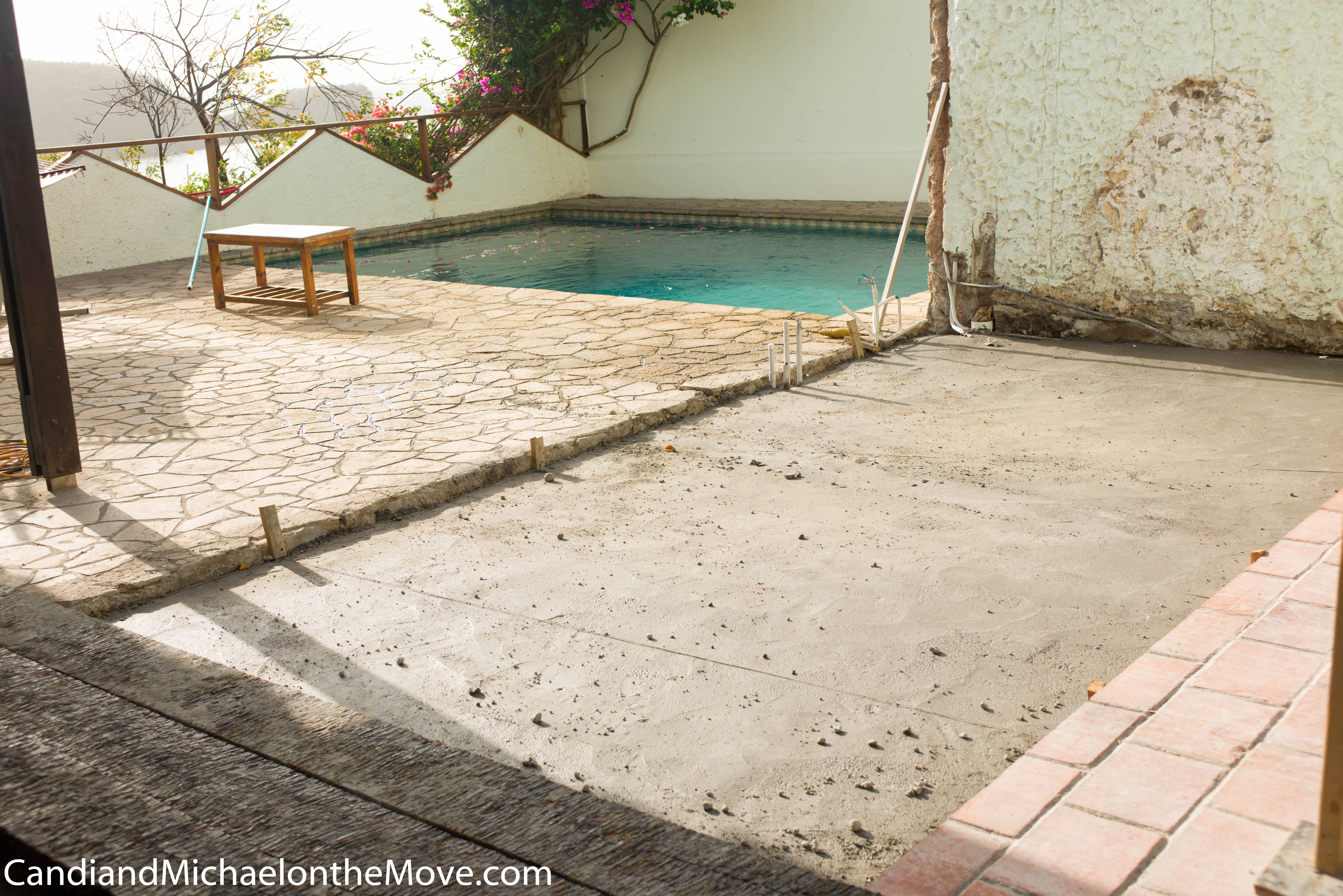
This is the first time a cement mixer was used.  Usually they mix all the concrete by hand, using shovels.   The only problem was that the cement mixer could not get up the driveway which means the workers had to wheelbarrow each load up our steep driveway.  Granted, it’s not as steep as some roads on the island but it’s a fairly step climb that you notice as you walk up empty handed, never mind pushing a heavy wheelbarrow filled with concrete.  UGH!  I’m sure I wouldn’t make it more than a few feet even with a “running” start on flat land.  But these great guys did it time and time again until the floor was completed.

The "finished" floor. I don't want ot thin about the number of trips these guys made all the way up the driveway to complete this. Now we are on the hunt to match the existing stone on the patio to cover the concrete.
The “finished” floor. I don’t want to think about the number of trips these guys made all the way up and down the driveway to complete this. Tomorrow, the planks will be removed and it will be an easy step down and back up to get to the patio. Now we are on the hunt to match the existing stone on the patio to cover the concrete.

Tomorrow the plank bridge will be removed and we no longer need to “walk the plank” to get out to the patio where we spend the bulk of our time when the workers are not jack hammering, pounding or pouring.

Next week, the first layer of roofing goes up.

Filed Under: Art, Expat life, Grenada, Travel

Walking the Plank ~ to Dinner

February 4, 2016 by Candi Licence 1 Comment

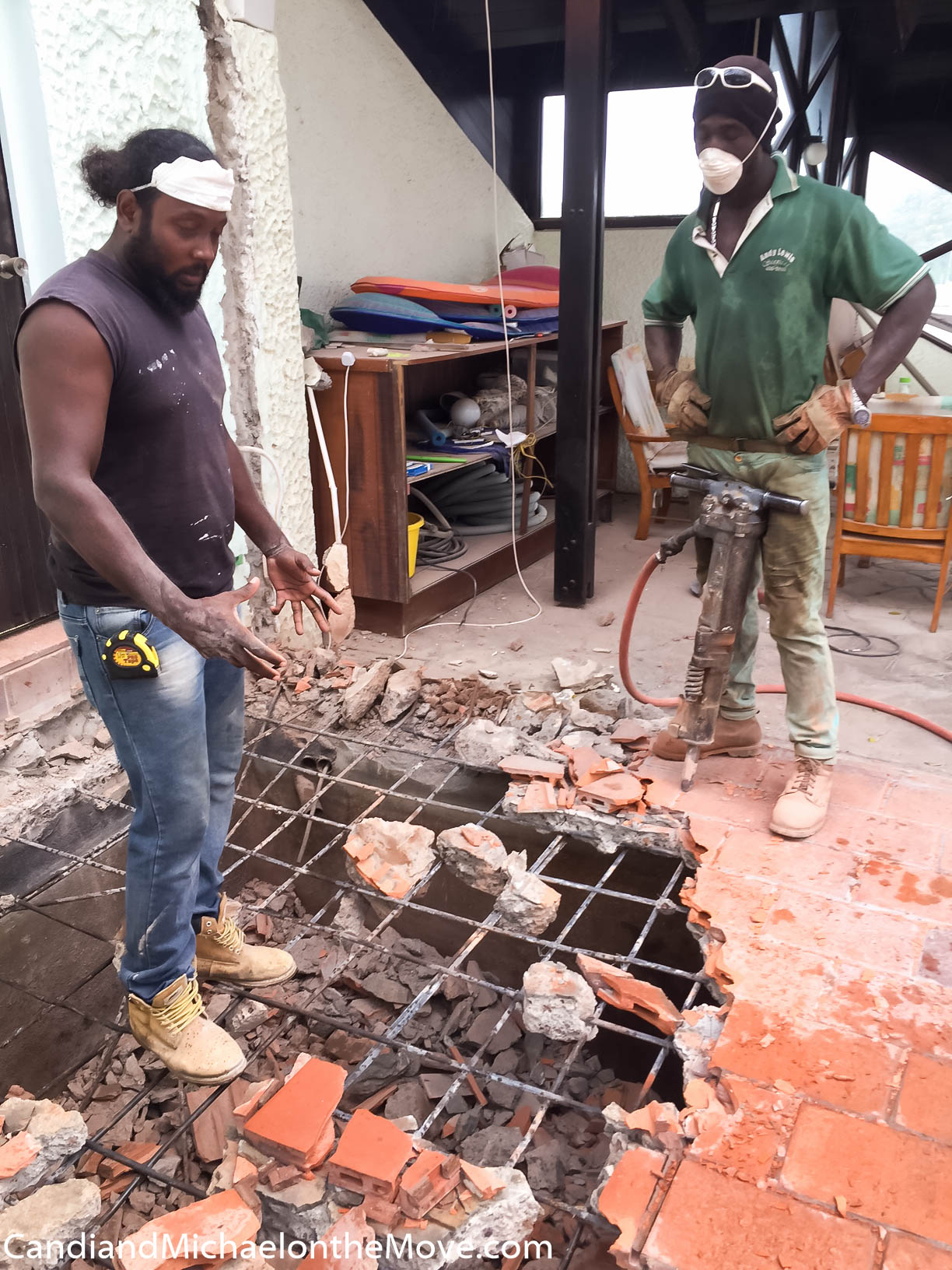
Saturday, January 30th at exactly 8:43 AM the jackhammering began.  We had already planned to be at the beach most of the day to watch the Sailing Festival but the noise and activity was a great impetus to get up and out early.

The start of the jack hammering. Check out the jackahmmer. Can you believe they are walking on top of the rebar? YIKES!
The jack hammering begins bright and early, dropping the rubble into the cistern below. Check out the jack hammer. Can you believe they are walking on top of the rebar? YIKES!

The living room floor is about 8 inches higher than the patio floor so as we move the wall to shorten the living room space, we need to lower the remaining floor to match the patio floor.  The living room floor is tiled and underneath the tile is a water cistern that captures rain off the roof and stores it.  Therefore, we need to jackhammer the tiles free, remove and then replace the “ceiling” of the cistern in order to lay down a new floor.

By removing the floor, we have effectively temporarily cut off access to the second master bedroom, as well as the patio.

As expected, the jack hammering ends up being an all-day process.  There’s thick tile to cut through, heavy cement holding the tile in place, plus a cement floor underneath (or ceiling above, depending on your perspective)  and lots of rebar.  When I left a short while into the demolition, a medium sized hole had been created.  This cut off the access to the second master bedroom and started to cut off access to the patio from the house.

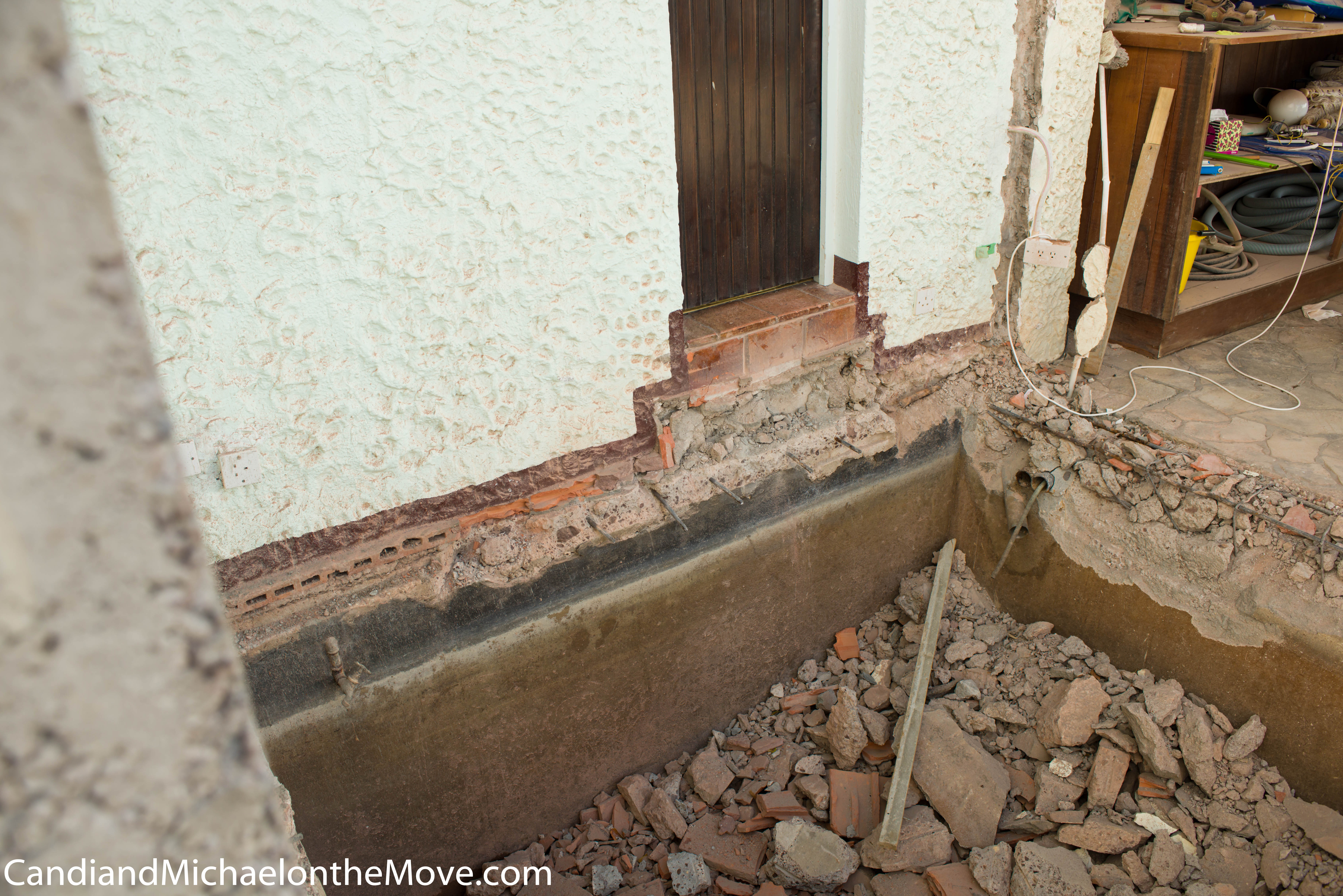
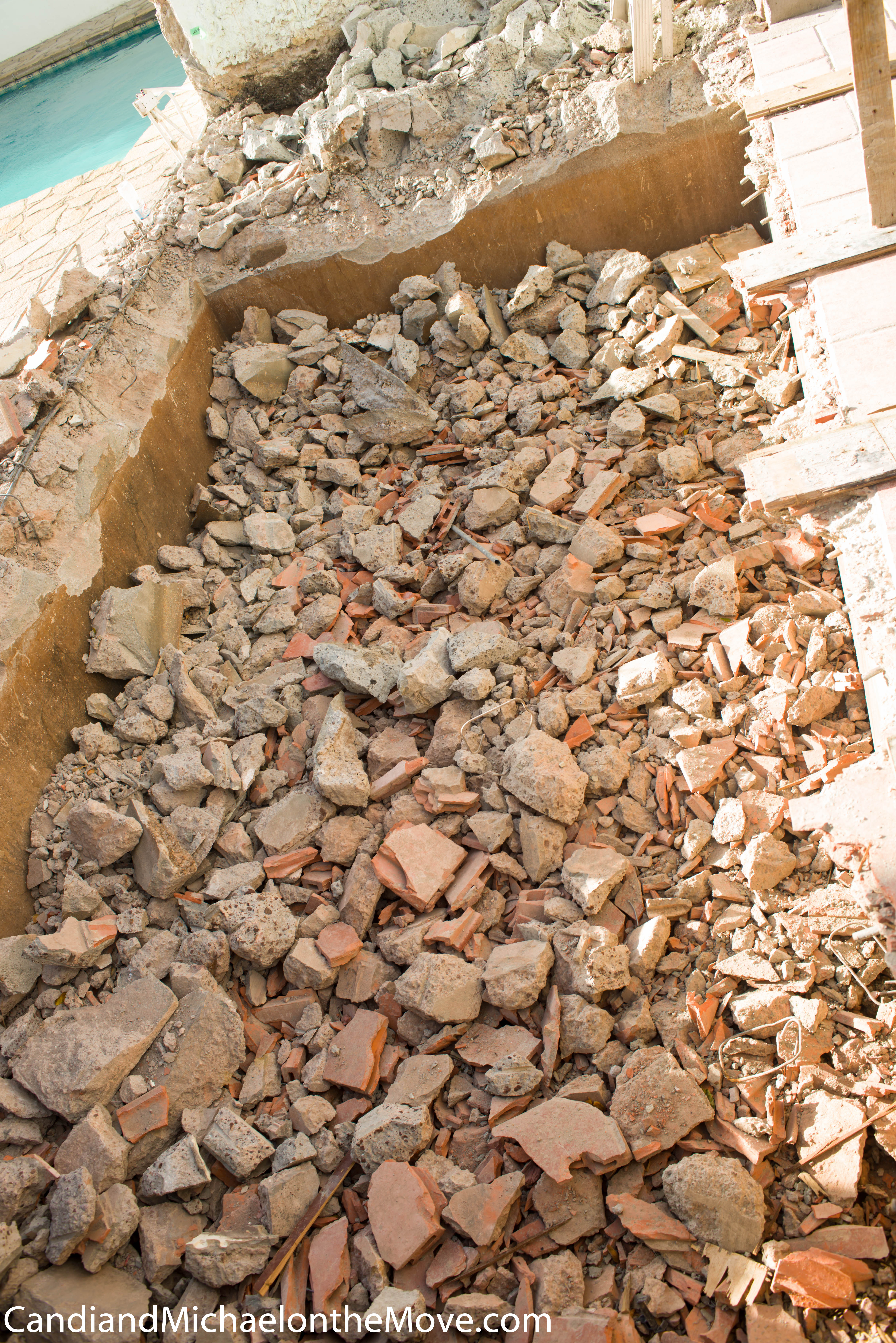
All this rubble which is filling up the cistern needs to be lifted out, wheel barrowed away and then trucked away.
All the floor rubble completely filled up the cistern. It needs to be manually lifted out and then wheel barrowed away.

Since we spend most of our time on the patio, having no access would seriously cramp our lifestyle.  The workers promised to build us a bridge to provide access to the patio while they work on recreating a new floor.

There is a tremendous amount of work that needs to be done to accommodate this “small change” of moving the living room wall.  We expect it will take 2 to 3 days to remove all the rebar and cement rubble that now resides at the bottom of the cistern.  Then they need to put in new rebar that will reinforce the new floor, build a temporary wooden cistern “ceiling” under the rebar so they have a foundation on which to pour a new floor.  The new cement floor will take 21 days to cure.

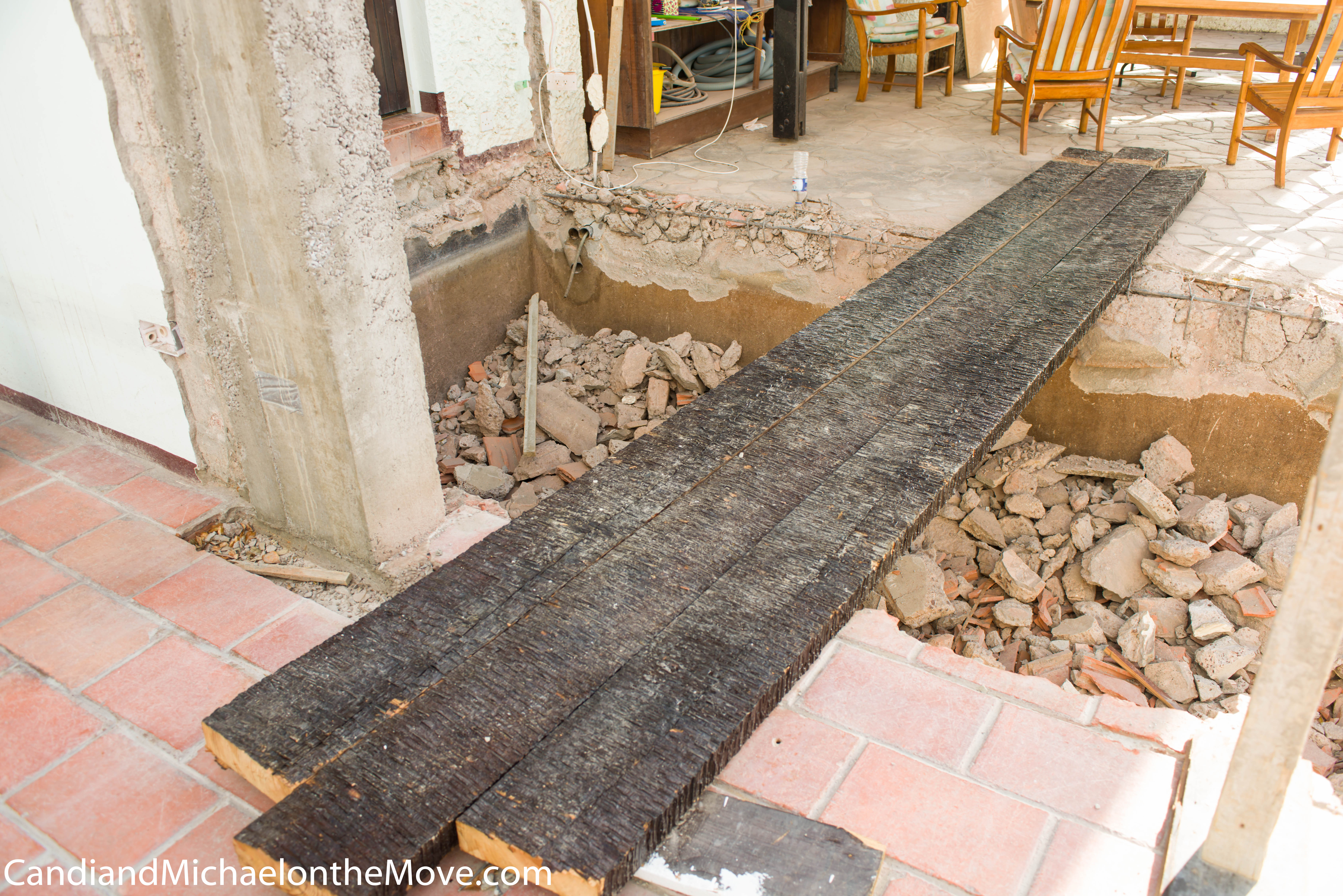
In the meantime, we have a “bridge” to the patio that is made out of the large rafters that were saved when the living room ceiling was removed.  And if this doesn’t feel like I am walking the plank to get to the patio, I don’t know what would.  The rafters are pretty solid, but it is a fairly long opening and remember the two floors are at different heights so there is a fair amount of flexing as I walk the plank.  Doable, but you definitely want to be paying attention because each plank flexes independently!

Our "bridge" from the living room to the patio ~ hence the walk the plank feeling.
Our “bridge” from the living room to the patio ~ hence the “walk the plank” feeling.
The wooden frame hasd been designed to made a molding at the top of the roof line to nicely finish off the new wall.
The block wall has been completed to the peak. The cut out is for the louver which will be installed later. A wooden frame has been designed to made a molding at the top of the roof line to nicely finish off the new wall. I can’t wait to see it unveiled.

We’ve made a lot of progress this last week.  Demolition is great because it’s so fast.  Construction on the other hand can look almost the same, day to day, as internal infrastructure is created or shored up before new work is visible.  The front wall has been completed – the ring beam has been poured, with lots of buckets of cement hoisted up to the peak filling in the concrete block, plus a mold has been poured to make the roofline look nicely finished.  The back wall ring beam has also been poured and is curing.

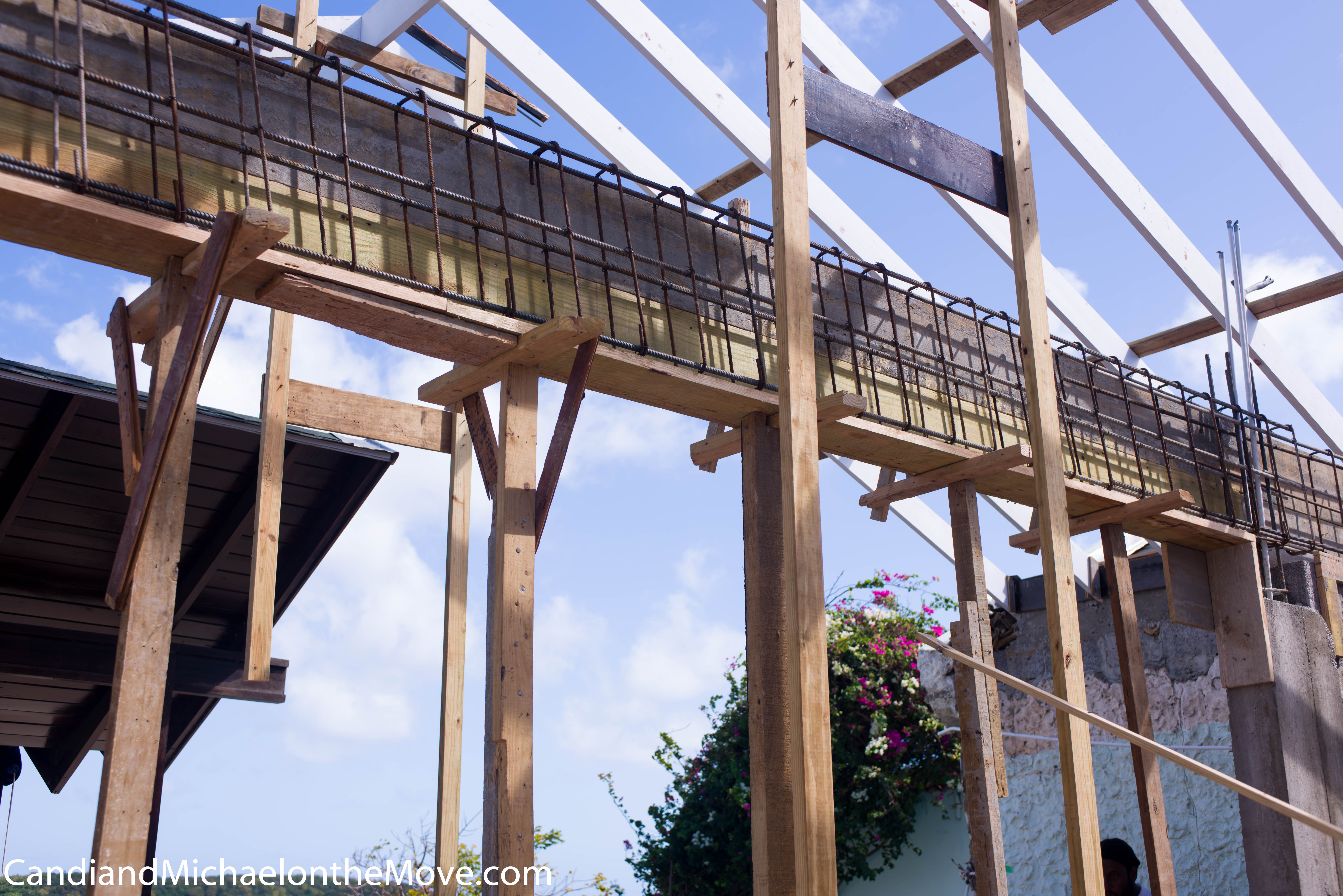
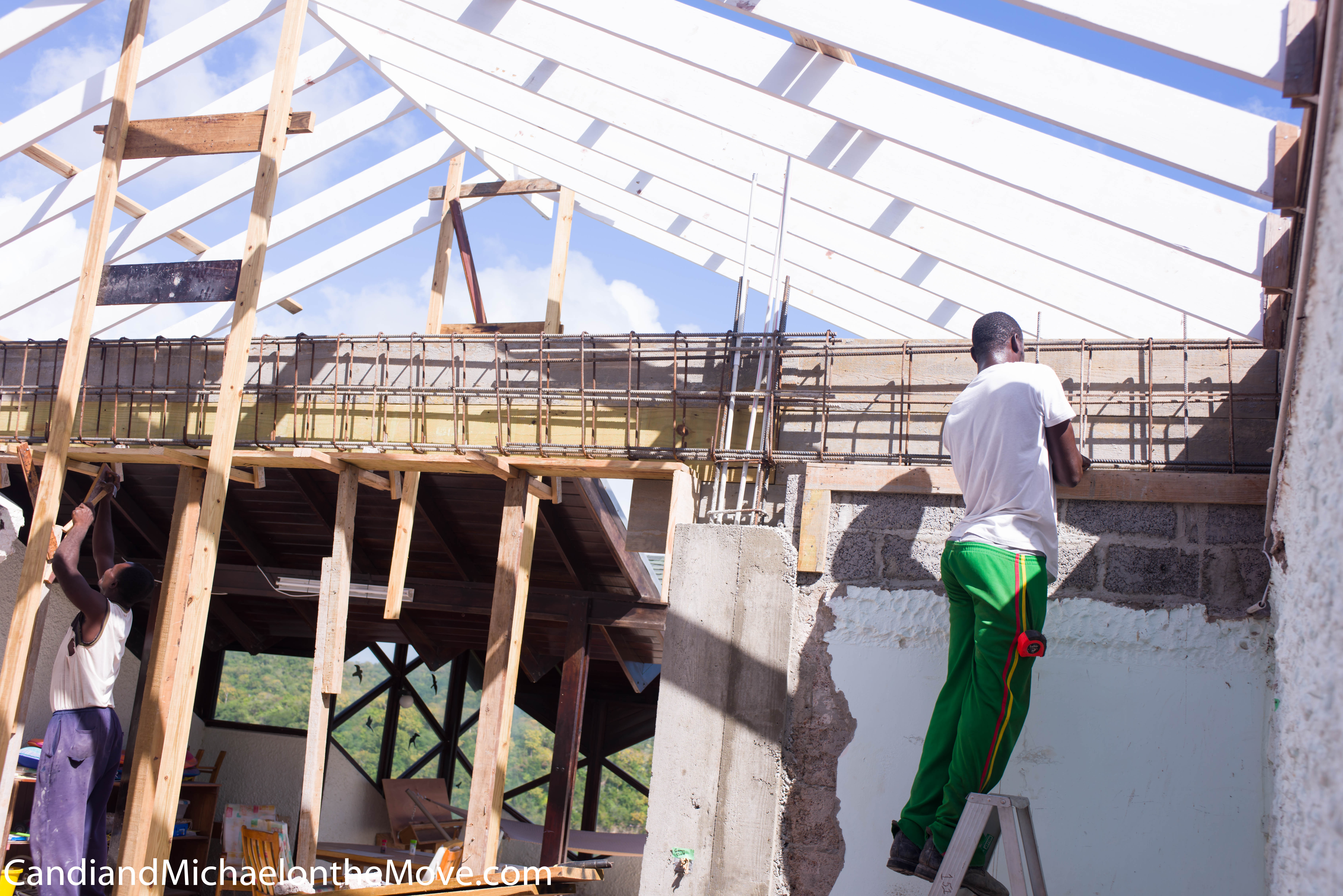
This is the ring beam which will make the house more hurricane proof. It will be completely filled with cement and tied into the other wall's ring beams.
This is the ring beam which will make the house more hurricane proof. It will be completely filled with cement and tied into the other wall’s ring beams.
Here they are starting to build a wooden box around the ring beam that will be the form for the concrete.
Here they are building a wooden box around the ring beam that will be the form to hold the concrete.

Now most of the focus is on building the infrastructure to pour the floor.  This is the critical path since there is a long curing period.  While the floor cures, work will resume on the roof.  And I’m hopeful that we will at least have the wooden ceiling in place by next week.

~ So long to the moonlit living room, hello to shelter.

Filed Under: Expat life, Grenada, Renovations, The Arches, Travel Tagged With: construction, expat life, Grenada, rennovation, The Arches, travel

Taking the Inside-Out Concept to the Extreme – No Roof ( … for now ….)

February 1, 2016 by Candi Licence 1 Comment

(Inside-out is a design concept where your living space feels like you are outdoors)

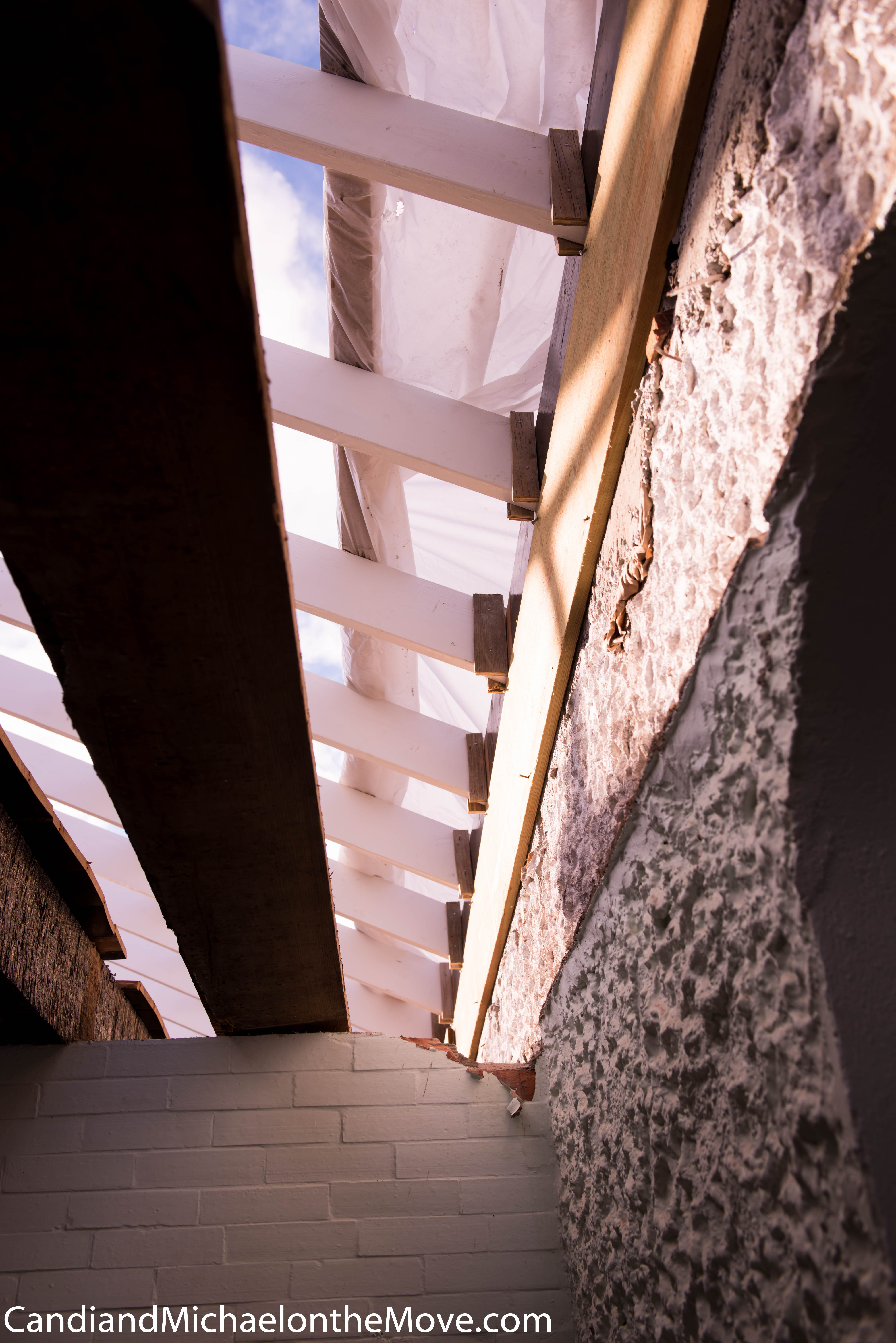
Believe it or not, this is the view standing in the living room and looking up, between the rafters, at night. At the full moon, the moonlight was so bright, we didn't need any additional light to see.
Believe it or not, this is the view standing in the living room and looking up, between the rafters, at night. At the full moon, the moonlight was so bright, we didn’t need any additional light to see.

It’s all in the perspective, isn’t it?  Dancing in the moonlight that filters through the rafters, feeling everything from sultry breezes to howling wind rushing through the living room space, loving the open space concept so much we shrink the living room length by a third and significantly expand the outdoor patio area OR complain that there’s too much dust, rain, disruption in our house and in our lives right now.  What would you choose?  I choose to dance.

After making the decision in October to raise the living room roof to facilitate more airflow, we hoped to complete the project before we arrived in early December.  However, coordinating all the moving parts – design, engineering, figuring out demolition and actual construction times took longer than we anticipated.  Therefore, we chose to wait until after the Christmas holiday to start the demolition and construction.  I’m really glad we did.

Once the rafters were put into place, the side walls were built taller, the front wall was built up to meet the new peak and the old roof was removed.  The team then demolished the complete back wall of the house so it could be rebuilt to accommodate a large opening (16 ft. by 10 ft.) as well as support a huge hurricane shutter.  This now opened up the living room space from the front door all the way to the back patio railing – about 65 feet long.  Dangerous activity – now we had a huge open space and I was loath to close it off again and wondering if was heading to divorce if I suggested we change our design plans.

This is a view of the front wall, all blocked up. The big opening at the top will have stationary louvers to let air flow through the room. The prevailing wond comes from the other direction so no concern about rain getting in.
This is a view of the front wall, all blocked up. The big opening at the top will have stationary louvers to let air flow through the room. The prevailing wind comes from the sea so no concern about rain.

Fortunately, Michael was thinking the same thing and when I merely mentioned that I hated the thought of closing up the space again, he suggested we rethink the design. Brilliant! One of the very best things I love about our relationship is how aligned we are in our thinking.  Again and again, we navigate this fun and crazy life easily as we dip and turn through challenges and changes.

The original back wall of the house.
The original back wall of the house, shown here, had an 8 foot sliding glass door and two windows. The new wall will have a 16 foot opening plus two 3 foot doors allowing for a lot more air flow.

We had until early the next morning to make the decision because, in theory, the new wall construction would start the next day.  Changing the design to make the outdoor space even larger is more challenging than you might think.  Placing the back wall in a new spot was not a big deal but we would also need to lower the existing floor to match the patio floor height, try to find new stone to match the existing patio floor (the quarry is no longer in operation), work around an underfloor cistern and rethink electric sockets and lighting.  And, of course, these changes would add more cost and construction time to the overall project.  We bounced around a bunch of ideas, decided to sleep on it and decide in the morning.

Michael woke me up around 6 AM and we walked the space one more time, decided to bite the bullet, authorize the change and then figure out the final details later.  Michael placed an urgent message into our Contractor, Antonio Fields, asked him to call us ASAP — “no problem, but a major change” – and to be sure to be in contact with us before his team arrived and started working.  Antonio looked at his phone shortly after, saw Michael’s phone number pop up and wondered what Michael could possibly want that he was calling so early in the AM.

Here is a shot of the new wall going up. Everything on the other side will be added to the patio space.
Here is a shot of the new wall going up. The floor on the far side of the wall will be lowered to match the patio floor height. This will create a much larger outdoor living area.

Antonio arrived shortly after, Michael outlined our thoughts and they started to discuss options.  The team arrived and his key workers added their thoughts to the discussion.  Soon they had the cover off the cistern and were peering into its depths trying to figure out the underground configuration and its impact on our desires.  At the end of the conversation, we had a new plan to shorten the living room by about 8 feet.

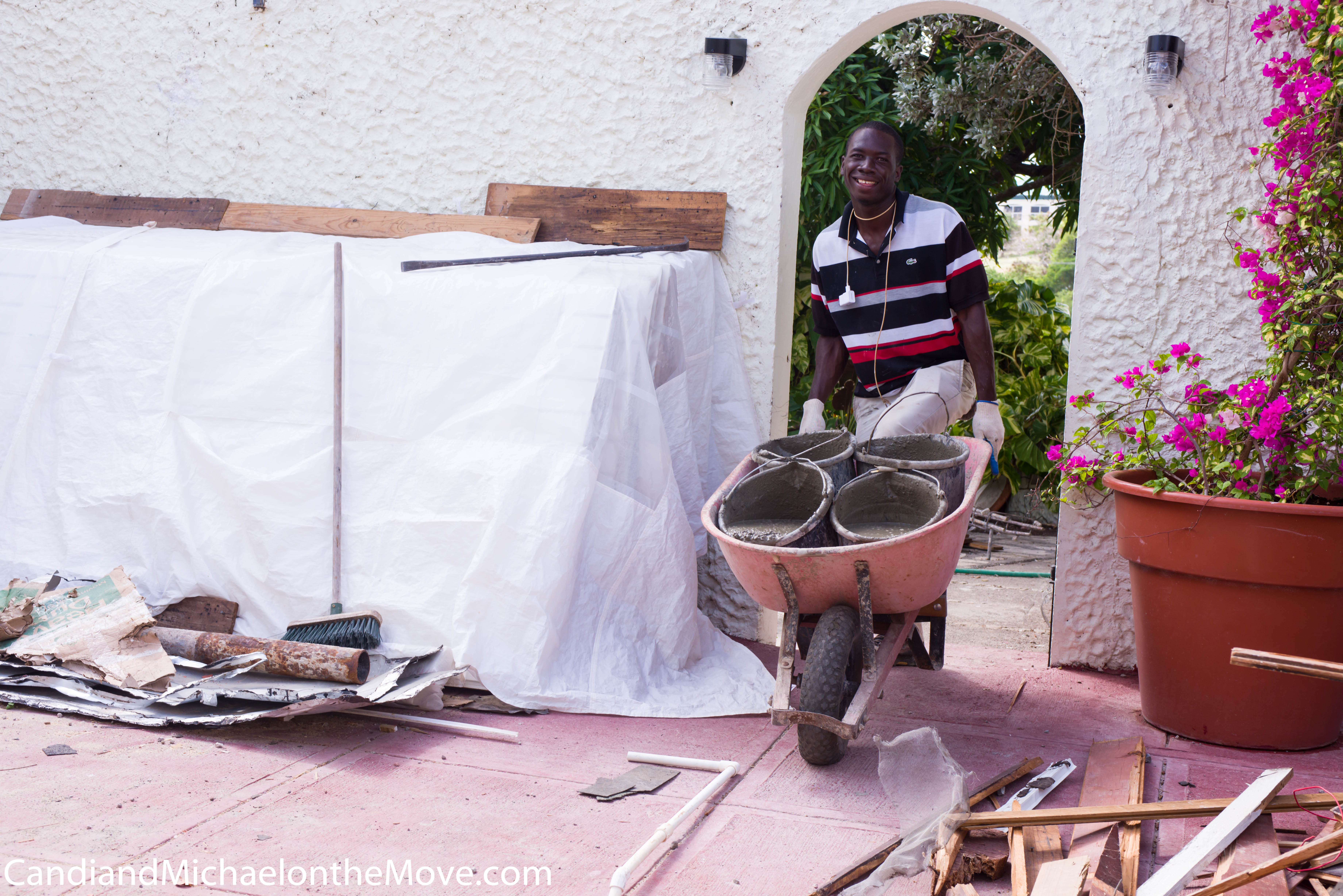
Most of the work here is done manually. All the cement is hand mixed, poured into buckets and moved by hand. By a smiling worker!
Most of the work here is done manually. All the cement is hand mixed, poured into buckets and moved by hand. By a smiling worker! To the left, painted ceiling panels covered by plastic and on the right construction rubble which is swept up and removed every day.

Since they had already built roofing rafters all the way to the “original” end of the room, we looked at keeping the original roof line intact which would now provide shade to the “new” part of the patio.  Caribbean house roofs generally don’t overhang too much beyond the walls because it provides too easy a way for really heavy wind to tear off the roof.  Generally, they rely on a secondary roof to extend out, under the original roof, which can be broken off under high winds without damaging the full structure.  Once the wall is built and the hurricane shutter is installed, we’ll determine the best way to add the secondary roof to cover the rest of the patio and tie it into the house.

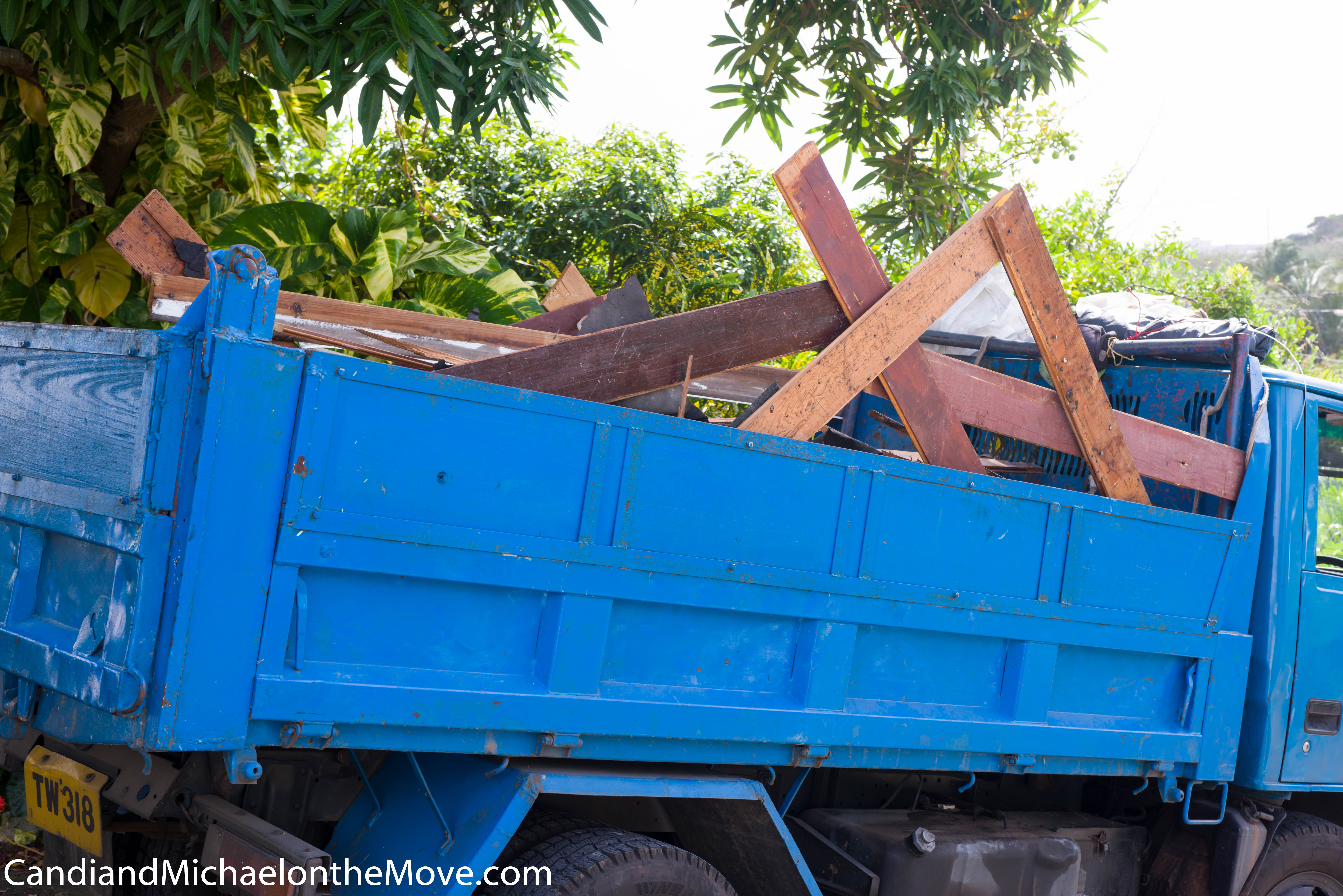
ANOTHER load of construction debris. Even with the workers saving a lot of wood, there is a huge amount of rubble that is getting trucked out on a regular basis.
ANOTHER load of construction debris. Even with the workers saving a lot of wood, there is a huge amount of wood and concrete rubble that is getting trucked out on a regular basis.

Now the “fun” begins as we blast out the living room floor tiles to see what is underneath, figure out how to reconstruct the cistern and decide how to pull together this new, larger outdoor space.

Confession: I’ve sort of been at loss about how to use the huge living room space since we first purchased the house.  A 30 by 30 foot space is big and would be delightful in a traditional home, but we spend all our time outdoors, if possible.  Even when it is raining, we generally are out on the patio that is covered.  The only time I expect we would use the living room is if it is raining so hard (plus strong winds) that you’d get wet being outside, even if undercover.

The questions that had been running through my mind were – Do we basically leave the living room empty?  Do we fully furnish it – (time, money and energy) when we expect to barely use it?  Would we really ever use it as a dining space (probably only if a large dinner party had been scheduled and it rained hard) and, if so, wouldn’t we just carry  the large dining table inside?  Now it will be a much more manageable space, with just the essentials necessary for horrific, rainy day living.   I’m going to keep count of the number of days between when we arrived in December and mid June, when we leave, that we need to stay inside due to overwhelming rain (zero so far).

Now the rainy season, July through December, might be another story but we plan to be traveling during that time.

Filed Under: Grenada, Renovations, The Arches, Travel Tagged With: construction, Grenada, rennovation, The Arches

And So It Begins ~ Raising the Roof, Literally!

January 26, 2016 by Candi Licence 5 Comments

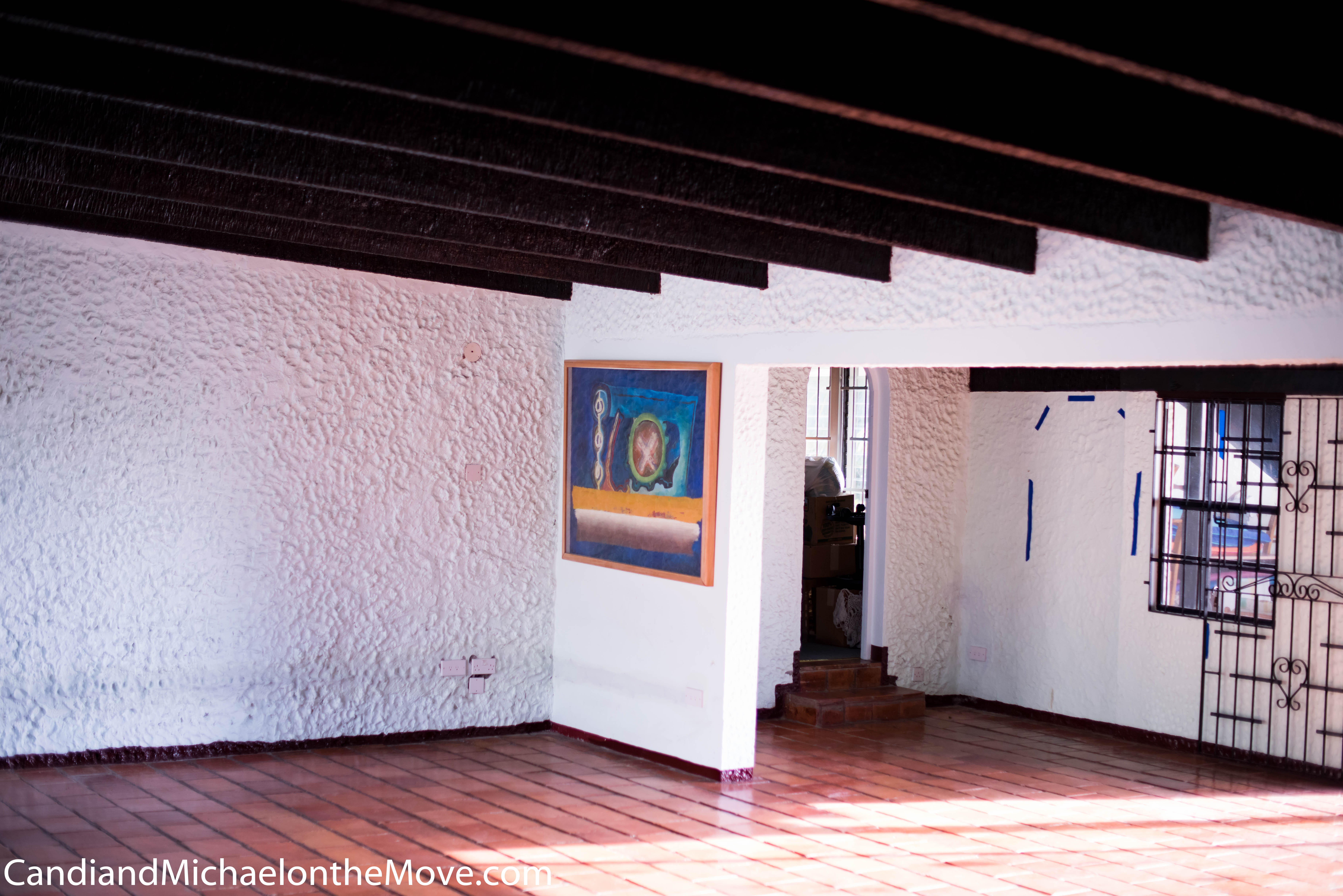
We are going to salvage the heavy rafters to make a outdoor trellis. The new ceiling will be white (and peaked)
A “before” picture – Dark ceiling, slanting from 10 feet to about 8 feet over 30 foot span. We are going to salvage the heavy rafters to make an outdoor trellis. The new ceiling will be white (and peaked)

The New Year is here and so the workers are returning from a long holiday break to take off our roof.  Our house is essentially three pavilions with separate but connected roofs.  The living room is in the middle.  Currently the living room walls are about 10 feet tall and there is a low, slanted roof that traps a lot of heat.  The walls are going to be extended to 12 feet high, including a ring beam, which will make the whole structure much more hurricane proof.  And then on top of the ring beam we will have a new, peaked ceiling with louvers on each end.  This will make the house much cooler and allow many more breezes to flow through this large, 30 by 30 foot space.

Grenada is located 12 degrees north of the Equator and hurricanes typically form at 15 degrees and higher so we have a much lower chance of hurricanes occurring here than most Caribbean islands.  In fact, Grenada is the first island where boaters can get insurance for their vessels.  Every island north of Grenada is 15 degrees latitude or higher and no hurricane insurance is available for boaters.  This is one reason Grenada has such an active marina business.  Many boats dock here during hurricane season either for protection or to get repaired during this turbulent time.

As you may know, Grenada got hit by a fierce hurricane in 2004 – Ivan.  The worst part was that the storm was tracking quite a bit north of Grenada, as would be expected, and turned suddenly – right as it aligned with Grenada and came south.  People had less than 2 hours to prepare and it devastated much of the island with 98% of the buildings being damaged.  Miraculously, only 2 people perished.  The only buildings to pull through relatively unscathed were all newly constructed and had been built to hurricane standards – with ring beams, for example.  Prior to Ivan, the last hurricane was Janet, in 1955.

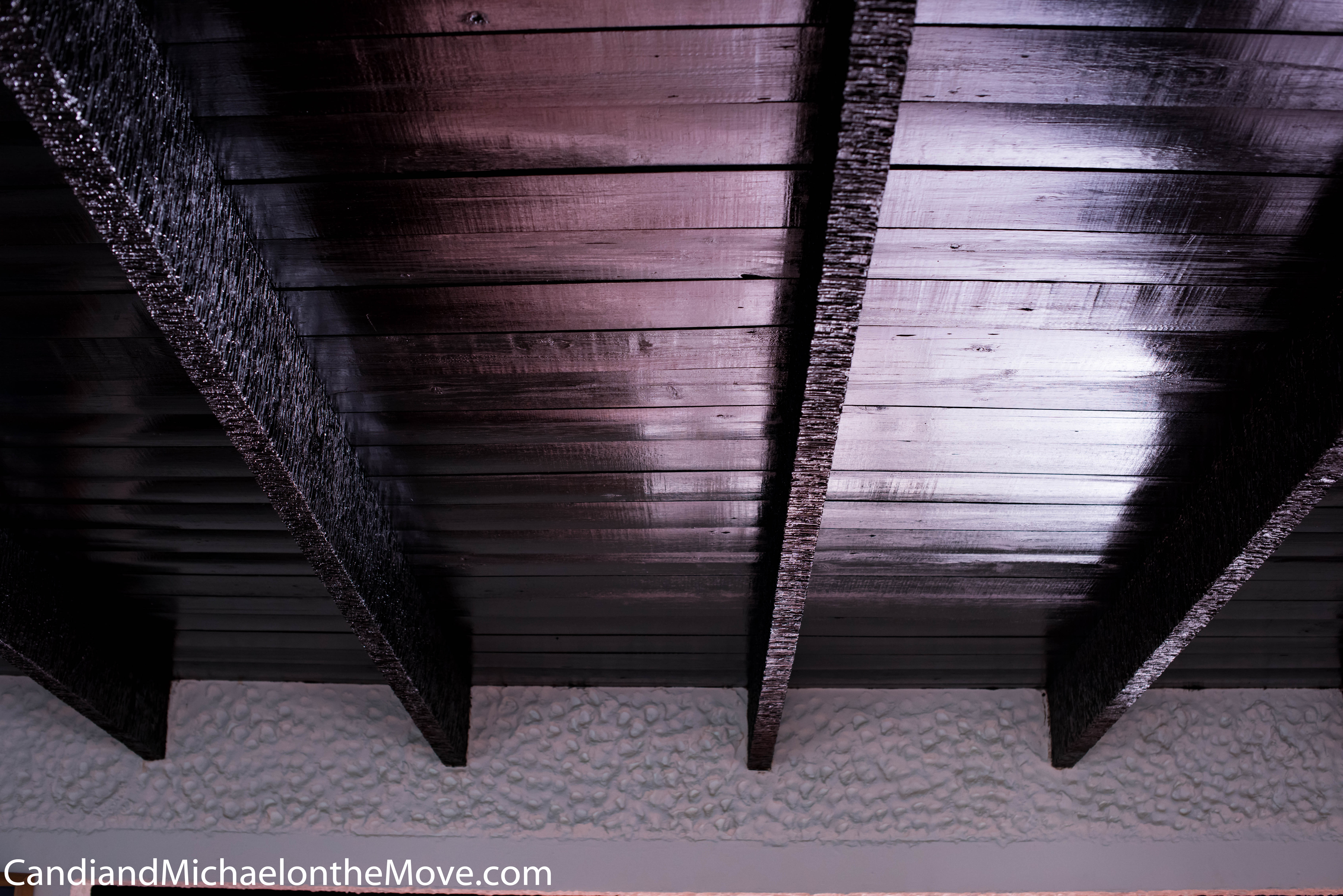
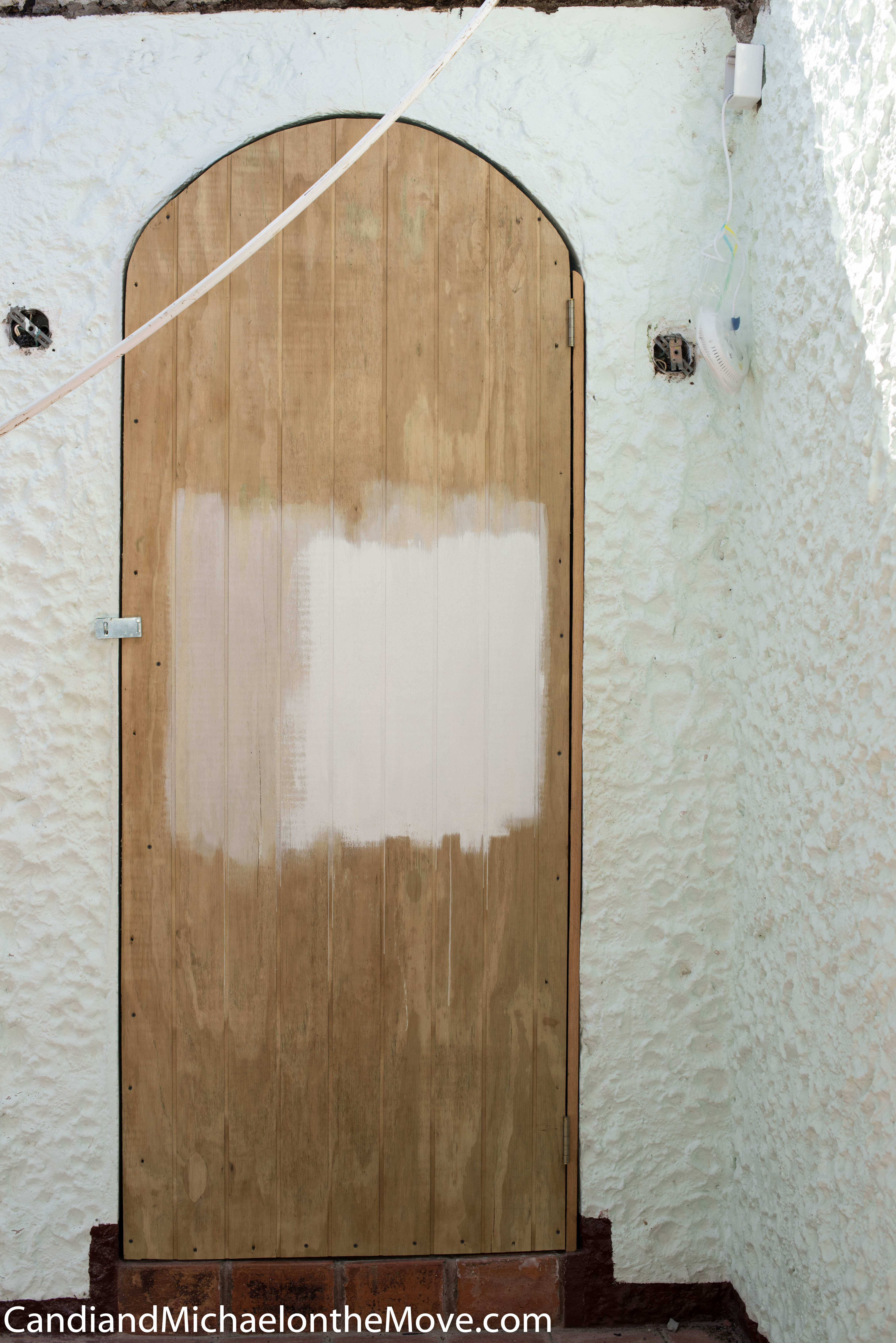
Here we are trying out different colors so we can decide what to paint the ceiling and the rafters.

We debated a lot of options before deciding to raise the roof because of the cost and disruption to the house.  Every other alternative that we explored would only partially address the heat issue – maybe – and we thought ultimately we would not be happy with the result so we just gulped and went for the “right” solution.  Originally, we hoped to have the new roof completed before December but by the time we got a solid design, coordinated it with some patio work we wanted done and had an Engineer check everything out, we ran out of time to have it completed before we arrived.

The tricky part was connecting the three roofs so there would be no leaking in the future.  The roof on the two side wings will be at a different height than the new ceiling roof.  The timing concern was that the break for Christmas holiday would interfere and we’d be stopped mid project (with no roof) for a couple of additional weeks.  Plus, the rainy season has been going later and later into December in recent years.  I think it ended up being a good decision because it rained – a lot (multiple times, every day almost) in December.

Now it is January and the work has begun.  The first couple of days were slow as everyone figured out how to do this major construction without completely removing the roof since we are living here during construction.  Fortunately the walls are cement and the floor has heavy tiles so we should not have any floor damage from water.  We were wondering how level the floor really is and how much water would stay in the room after each rain.  The courtyard, kitchen and bedroom entrances to the living room are all 2 steps up so we knew the rest of the house would be protected and there is a straight out exit to the pool and patio and we were hoping, fingers crossed, that the water would run right out the big sliding glass doorway to the patio.

Another "before" picture - you can see the tiled floor, concrete walls and the step up to a bedroom - all good things for a room that will not have a roof for a couple of weeks..
Another “before” picture – you can see the tiled floor, concrete walls and the steps up to a bedroom – all good things for a room that will not have a roof for a couple of weeks.
Here you can see the roof cut away so they can extend the walls to 12 feet, capped with a ring beam to make the structure more hurricane proof.

The first major piece of work was removing the asphalt tiles from the roof and removing about 4 feet of roof off either side so the side walls could be made taller.  If it rained, we’d get minimal leakage over the bulk of the roof and the room was only totally exposed the length of the room on the 2 sides.  Piece of cake, right?  We had a small rainstorm on Friday afternoon and there was only a little standing water after it was over – no problem.

Saturday evening was a different story.  We were out on the covered patio having dinner with Nadica and Mikiah, my best Grenadian friend and her daughter (my Goddaughter), when a big storm blew in.  I jumped up to close our bedroom windows and started laughing as I approached the living room.  As predicted, there was only dripping throughout most of the living room as rain came in between the cracks in the planks but the 2 sides where there was no roof, the rain was pouring in.  Plus, because the 2 roofs for the other pavilions are already peaked, all the rain was running down those slopes into the living room on either side.  This meant that to get into the bedroom wing I had to walk through the waterfall that was so beautifully cascading into the living room.  I was soaked and laughing.  Caribbean rain is warm so it is an entirely different feeling to get wet here – no problem.

Most of the water did run out the doorway as we had hoped, but there were a few low spots that collected a good bit of water.  Of course one low spot was right in front of the bedroom wing doorway so we had to slog through about 3 inches of water before we reached the steps up.  This gave plenty of time for Mick’s webbed feet to soak up a ton of water that could then be dripped everywhere – first order of business for week two was making a platform that would cover any water.  This worked perfectly for us but Mick just walked around the platform and through the water to approach from the side.  HMMMM.  Ultimately, we were worried about having the standing water sit for any length of time because of potential damage to the floor, so we ended up just sweeping out the low spots.  Problem solved.  Fortunately the rainy season has ended and we have and very little rain since then.

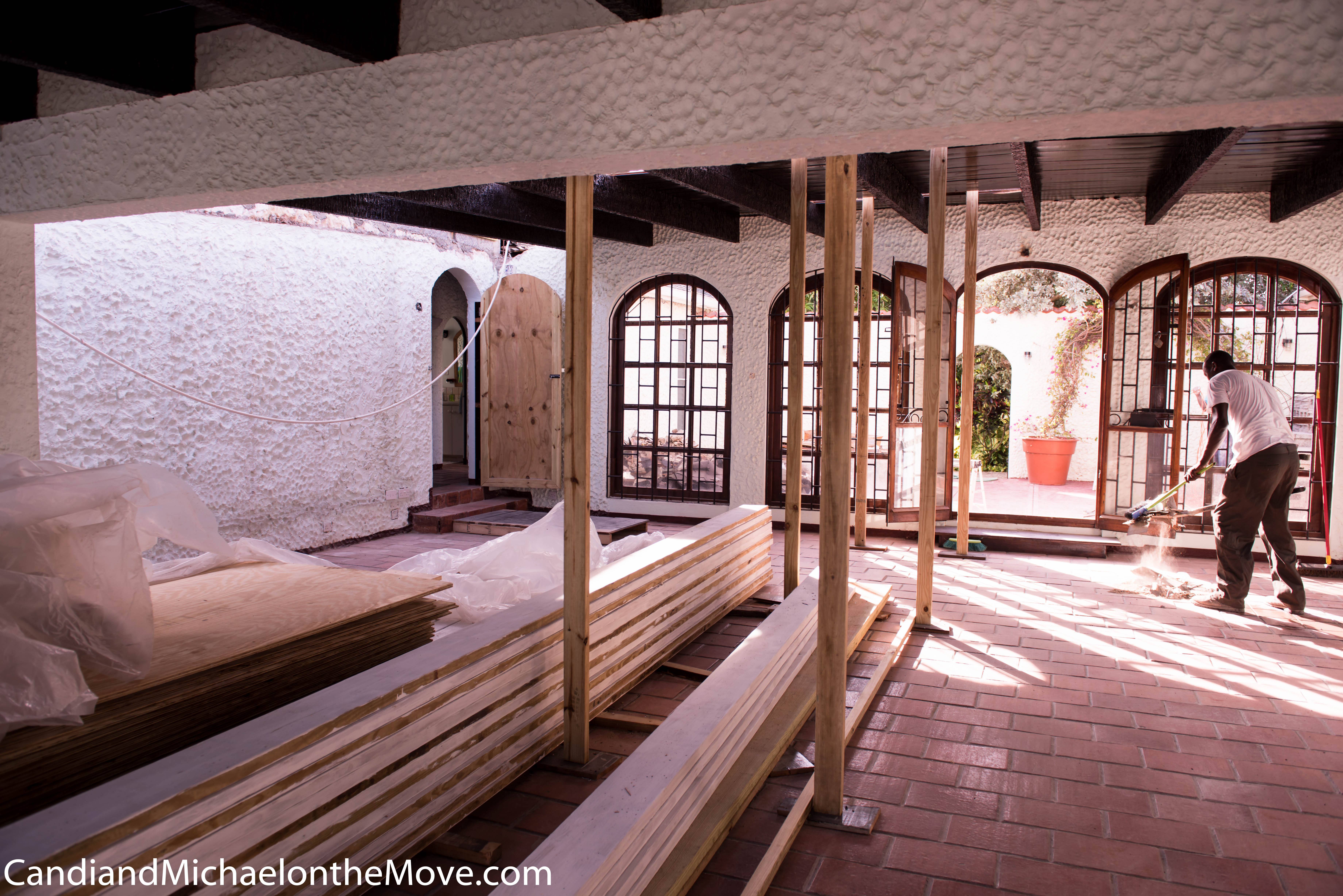
Lots to see in this picture - temporary door so we can lock it at night (since living room is no longer secure), the platform that was built to cover the low spot in the floor (that collects water), clean up every day (so the house is livable during construction).
Lots to see in this picture – temporary door to the bedroom wing (on the left) so we can lock it at night (since living room is temporarily not secure), the platform that was built to cover the low spot in the floor by bedroom wing door (that collects water), and daily clean up so the house is livable during construction.

Construction is such messy work.  Lots of breaking up of concrete which means lots of little pieces of rock lying all over and dust everywhere.  I hadn’t processed that in order to make the walls higher, they would have to pull off a little of the roofs on either side pavilion so we have had openings into the kitchen and both master bedrooms that lets in rocks, dust and mosquitos.  Delightful!  The mosquitos this year have been the fiercest I’ve ever seen and I’m hoping as the area dries out, they will die or head elsewhere.  In the meantime, we’ve been camping out in our air conditioned office during the day that does not abut the living room so all 4 walls and roof are intact.

The workers have been really diligent in cleaning up the site every day.  Everything is carted off, stacked up and swept before they leave each day.  I was thanking one man about the clean up one day and he said something interesting …  He said of course they were cleaning up so it would be as nice as possible for us but, even if we weren’t on island, they would do it anyway because it was much more motivating to arrive at a clean job site each morning.  Makes sense to me AND I really appreciate it.

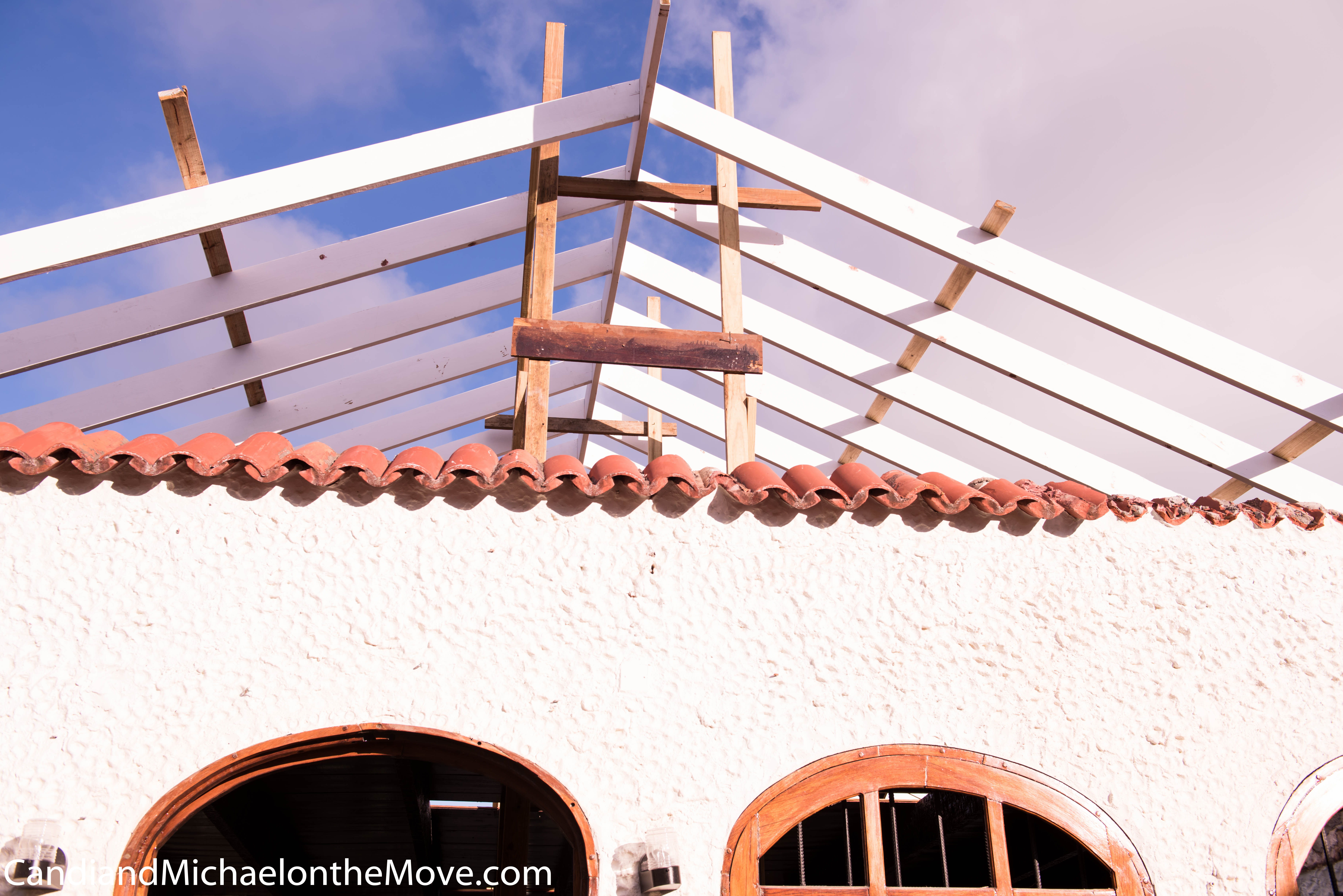
The workers also worked Saturday to keep the project moving. All the rafters went up in one day. YEAH!
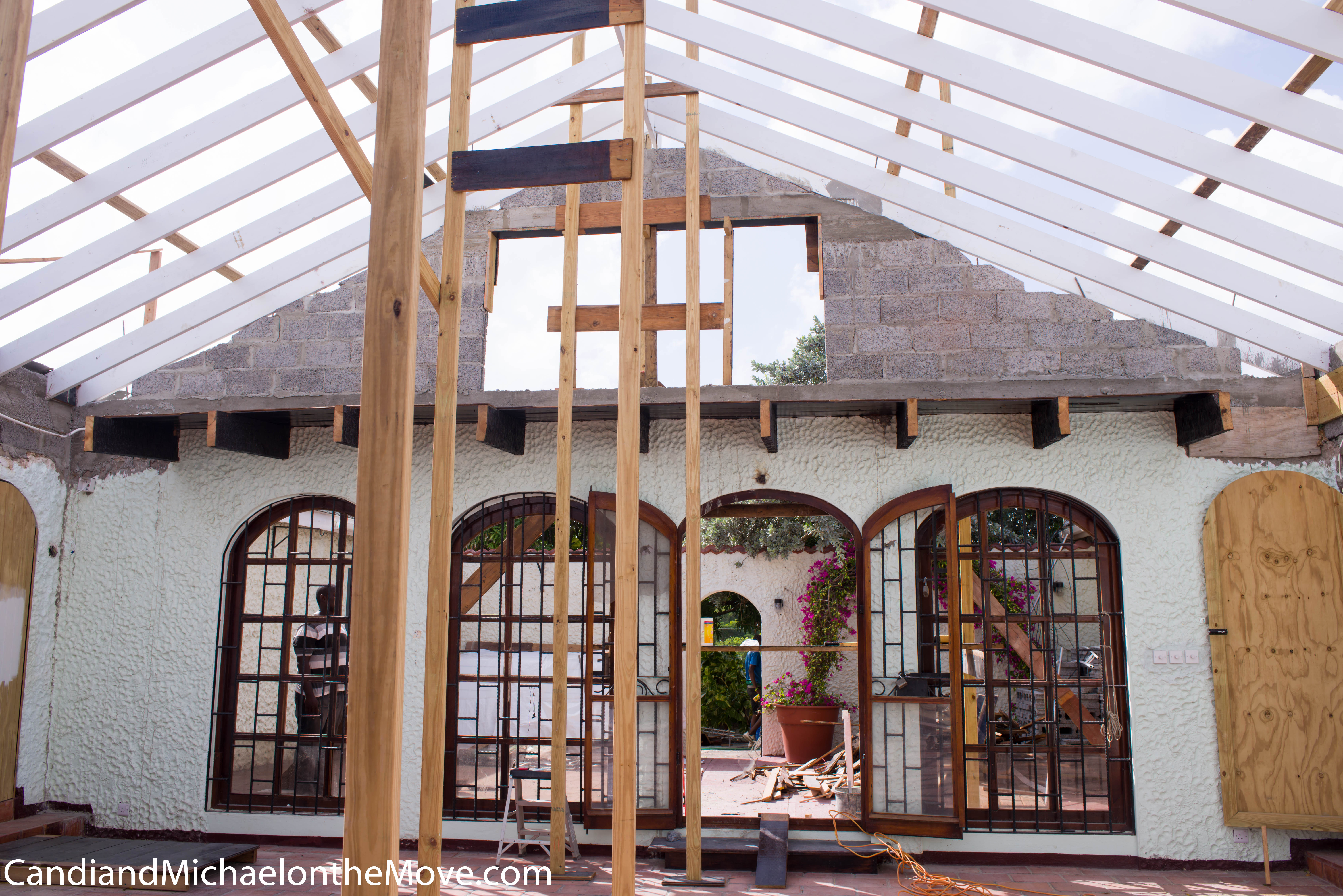
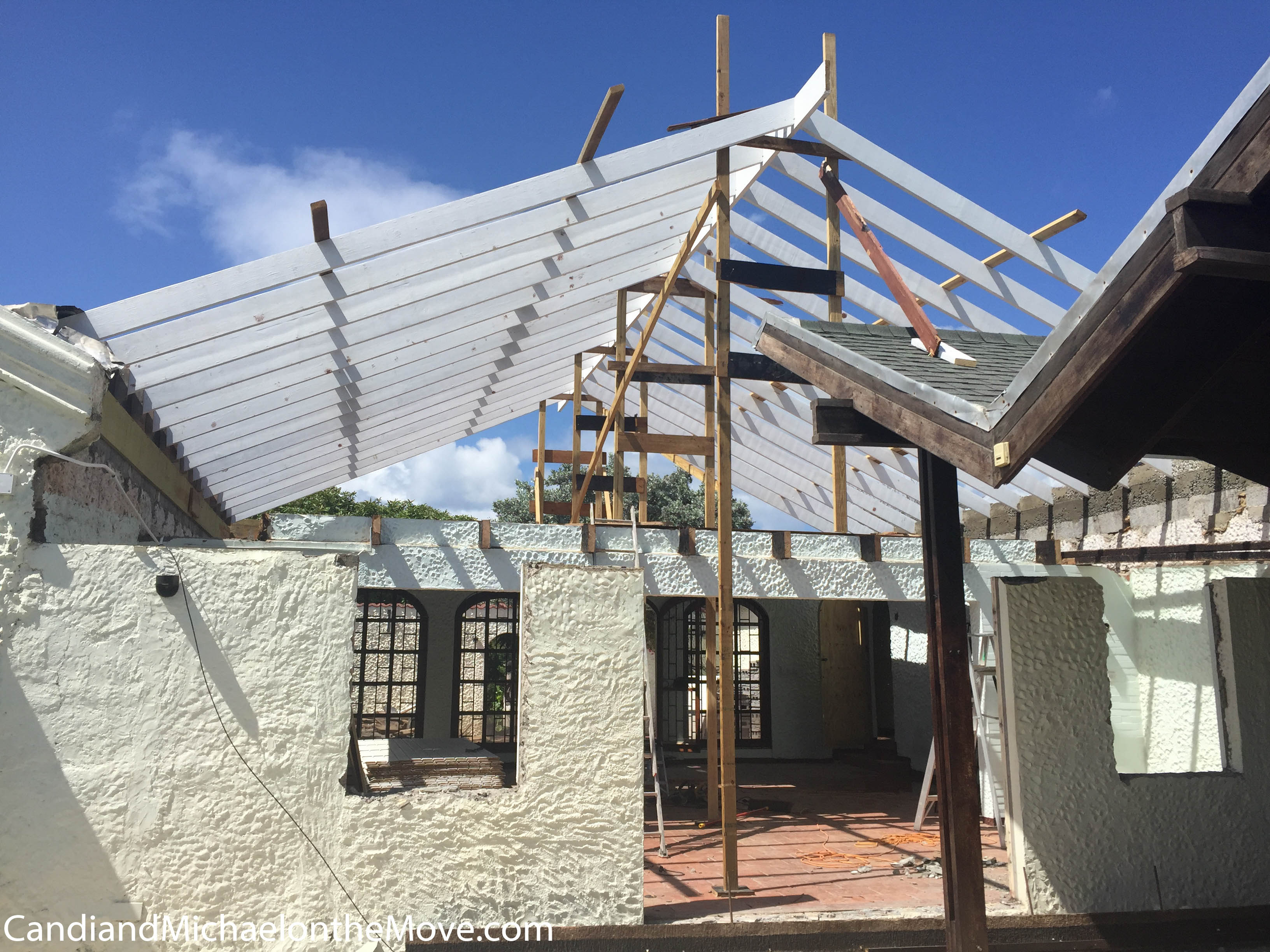
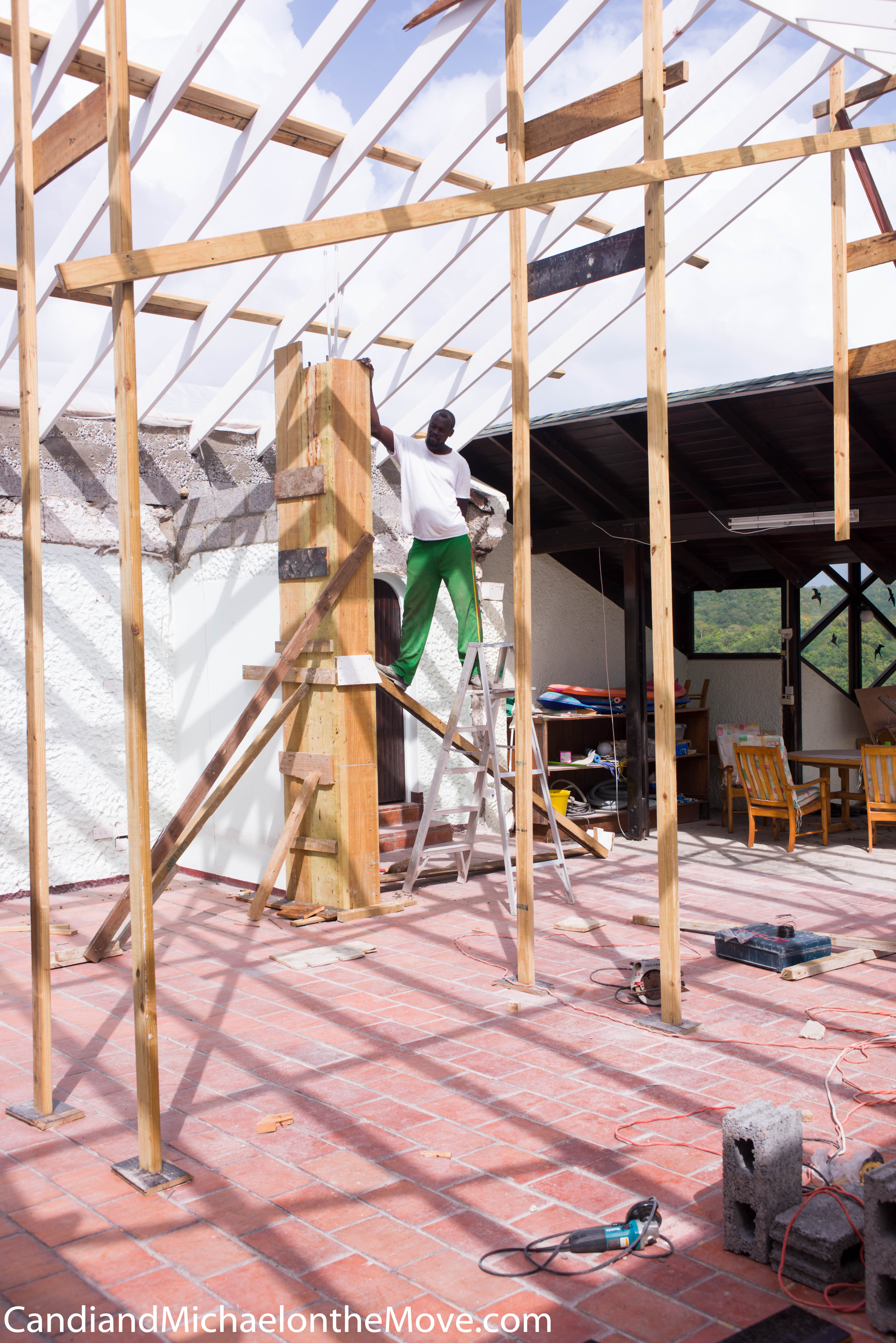
The workers also worked last Saturday to keep the project moving. At 9 AM the first rafter was lifted into place. By 4 PM, all the rafters were completed. (Note the “staircase” erected so workers could get to the top of the peak). YIKES!

Work has steadily progressed and after a few days of lots of activity, but not much visible change, we are now seeing the skeleton of the new roof going up through the peak holes of the roof.  YEAH!  It’s really exciting to see the progress.

Filed Under: Grenada, Renovations, The Arches, Travel Tagged With: Grenada, renovations, The Arches

  • « Go to Previous Page
  • Page 1
  • Interim pages omitted …
  • Page 3
  • Page 4
  • Page 5
  • Page 6
  • Page 7
  • Interim pages omitted …
  • Page 18
  • Go to Next Page »

Primary Sidebar

About Candi and Michael

Michael and I retired early in 2014. We stored everything we couldn't part with (art and prized possessions), sold most everything else, packed a trailer and started traveling full time. We rented a fully furnished house, in a place we always wanted to visit, lived there for 3 months and then we moved onto the next place. We stayed in Grenada for 3 months and ended up buying a house. Now we are modifying the plan a bit and we will live in Grenada and travel part-time. Read More…

Where are we now?

We are both in our home in Grenada.


Recent Posts

  • SpiceMas 2022 ~ “D Return” August 25, 2022
  • Shipping Barrels and Extreme Friendship ~ COVID-19 in Grenada December 16, 2020
  • Trying to Patch our Virus Free Bubble ~ COVID-19 in Grenada November 22, 2020
  • Reunited ~ And It Feels So Good! ~COVID-19 in Grenada July 13, 2020
  • The Corona Tango ~ One Step Forward, Two Steps Back ~ COVID-19 in Grenada June 27, 2020
  • Running in Circles, Nowhere to Go ~ COVID-19 in Grenada June 24, 2020
  • Holding Down the Fort, Part 2 ~ Rescue and Recovery/Order Restored ~ COVID-19 in Grenada June 18, 2020
  • Holding Down the Fort, Part 1 ~ Havoc Reigns ~ COVID-19 in Grenada June 14, 2020
  • Sounds of Silence ~ COVID-19 in Grenada April 12, 2020
  • COVID-19 in Grenada April 6, 2020
  • Small Country ~ Big Sadness February 28, 2020
  • Planting Seeds and Creating Sparks ~ Art and Love in Grenada May 22, 2019
  • Down to The Wire ~ Finishing (?) the Patio March 25, 2019
  • Pouring a Patio Extension ~ How Hard Can It Be? March 8, 2019
  • A Day in the Life ~ Picking up Sheila’s Birthday Cake April 9, 2018
  • I’m Famous! ~ (Almost) March 29, 2018
  • A Lesson in Patience ~ The Refrigerator Saga December 11, 2017
  • Taking the Plunge ~ The 2017 Ultimate Travel Writer’s Workshop October 25, 2017
  • Coming Home ~ Sweet, Sweet Home ~ First Impressions March 6, 2017
  • One Roof On, Another Roof Off ~ And Other Changes March 11, 2016
  • The Best of Grenada Sailing Week ~ The Workboat Regatta February 26, 2016
  • Two Steps Forward, No Steps Back ~ Making Progress February 23, 2016
  • Walking the Plank ~ to Dinner February 4, 2016
  • Taking the Inside-Out Concept to the Extreme – No Roof ( … for now ….) February 1, 2016
  • And So It Begins ~ Raising the Roof, Literally! January 26, 2016
  • The Calm Before the Storm ~ Christmas Season in Grenada January 15, 2016
  • Free at Last ~ Clearing our Container through Customs December 26, 2015
  • Best Laid Plans ~ and Murphy’s Law December 16, 2015
  • A Moving Adventure ~ “Bon Voyage”, Container December 14, 2015
  • Research, Procure, Pack, Repeat ~ Buying (everything) for our Grenada home December 5, 2015
  • Coming Home ~ Our First Visit to Our New House December 2, 2015
  • The Ultimate Challenge ~ Remote Project Management in a Third World Country November 29, 2015
  • Living the Dream ~ Buying a house in Grenada September 24, 2015
  • Proceed at Your Own Risk ~ Driving in Grenada (Part 3 of 3) April 16, 2015
  • Proceed at Your Own Risk ~ Driving in Grenada (Part 2 of 3) March 31, 2015
  • Proceed at Your Own Risk ~ Driving in Grenada (Part 1of 3) March 29, 2015
  • Canboulay, J’ouvert, Mas ~ Carriacou Carnival 2015 March 27, 2015
  • “Eat Local” ~ John’s Oceanview Restaurant February 11, 2015
  • Gourmet Grenadian ~ Boots Cuisine February 5, 2015
  • Our First Adventure ~ Welcome to Grenada January 29, 2015
  • Making Home ~ Settling into our Villa in Woburn, Grenada January 27, 2015
  • Canine Captain ~ Mick’s Travel Adventure January 23, 2015
  • Operation Grenada ~ Moving Ourselves to the West Indies January 21, 2015
  • Imagination Revealed ~ Dale Chihuly’s Glass Inspirations December 31, 2014
  • Delectable Ritual ~ Savouring the Sunset December 21, 2014
  • Dinner on a Sandbar ~ Blue Moon Beach Grill November 26, 2014
  • Best Beach Getaway ~ Ocracoke Island November 10, 2014
  • Whirlwind Tour ~ Showcasing the Essence of the Outer Banks November 5, 2014
  • Wild Mustangs ~ An Outer Banks Adventure October 18, 2014
  • Marvelous Moondance ~ Full Lunar Eclipse October 15, 2014
  • An Unexpected Gourmet Delight ~ Mike Dianna’s Grillroom October 12, 2014
  • Personal Chef on Call ~ Chez Michael October 8, 2014
  • An Enchanted Sanctuary ~ Elizabethan Gardens October 5, 2014
  • Fun Music and good food too! ~ Cravings September 30, 2014
  • Chasing the Light ~ Shooting the Bodie Lighthouse at Daybreak September 23, 2014
  • Learning to Fly ~ The Wright Brothers in Kitty Hawk September 10, 2014
  • Creating Home, Again ~ Arriving in the Outer Banks September 5, 2014
  • Farewell Key West ~ C & M “On the Move” August 25, 2014
  • Beautiful Birthday Memories ~ Dinner at Cafe Marquesa August 4, 2014
  • “A Key West Locals Secret” ~ New York Pasta Garden July 29, 2014
  • The Square Grouper ~ And Other Fish Tails July 26, 2014
  • The Locals Hideaway ~ Boca Chica Beach July 24, 2014
  • Tantalizing Tapas ~ Santiago’s Bodega July 21, 2014
  • Doesn’t Get Any Better Than This ~ Moonrise/Sunset Sailing July 18, 2014
  • Happy Wife, Happy Life ~ The Key West Jewelry Bar July 8, 2014
  • ‘Hunker Down’ with Bill Blue and Friends July 3, 2014
  • Local Color ~ Mr. James Chapman July 1, 2014
  • A Mid Summer’s Night Dream & Spectacle ~ Summer Solstice June 25, 2014
  • Savory or Sweet? ~ Key Plaza Creperie June 19, 2014
  • “A Great Place …. if You Can Find It” ~ Hogfish Bar and Grill June 19, 2014
  • ONE HUMAN FAMILY and the Key West Pride Parade June 18, 2014
  • Cajan Delights at the Blossom Cafe June 14, 2014
  • Candi and Michael’s Honey Moon June 14, 2014
  • Hunting for Iguanas June 4, 2014
  • Rainy Day and Café Solé June 2, 2014
  • Exploring Key West May 27, 2014
  • Really settling in May 25, 2014
  • Market Day Delights May 22, 2014
  • Namaste ~ Our Key West home May 17, 2014
  • Arriving in our Key West Paradise May 16, 2014

Tag Cloud

Art Blue Moon Beach Grill Boots Cuisine Carnival Carriacou Carnival Christmas construction Container COVID-19 Dale Chiuhly driving expat life Grenada Grenada Sailing Festival Hurricane Ivan Iguana Inn on Silver Lake Jessica's Dune Key West Mick Mount Moritz Moving Mural museum music Namaste nature Outer Banks Preparation Rebecca-art-studio rennovation renovations Restaurants RoxiArtwork sailing Sarasota Area SpiceMas storage sunsets The Arches travel travel preparation Travel Writing TSA precheck Welcome Villa

Copyright © 2026 · Lifestyle Pro on Genesis Framework · WordPress · Log in

Manage Cookie Consent
To provide the best experiences, we use technologies like cookies to store and/or access device information. Consenting to these technologies will allow us to process data such as browsing behavior or unique IDs on this site. Not consenting or withdrawing consent, may adversely affect certain features and functions.
Functional Always active
The technical storage or access is strictly necessary for the legitimate purpose of enabling the use of a specific service explicitly requested by the subscriber or user, or for the sole purpose of carrying out the transmission of a communication over an electronic communications network.
Preferences
The technical storage or access is necessary for the legitimate purpose of storing preferences that are not requested by the subscriber or user.
Statistics
The technical storage or access that is used exclusively for statistical purposes. The technical storage or access that is used exclusively for anonymous statistical purposes. Without a subpoena, voluntary compliance on the part of your Internet Service Provider, or additional records from a third party, information stored or retrieved for this purpose alone cannot usually be used to identify you.
Marketing
The technical storage or access is required to create user profiles to send advertising, or to track the user on a website or across several websites for similar marketing purposes.
  • Manage options
  • Manage services
  • Manage {vendor_count} vendors
  • Read more about these purposes
View preferences
  • {title}
  • {title}
  • {title}